
Why Stump Removal and Grinding Are More Than Cosmetic Fixes
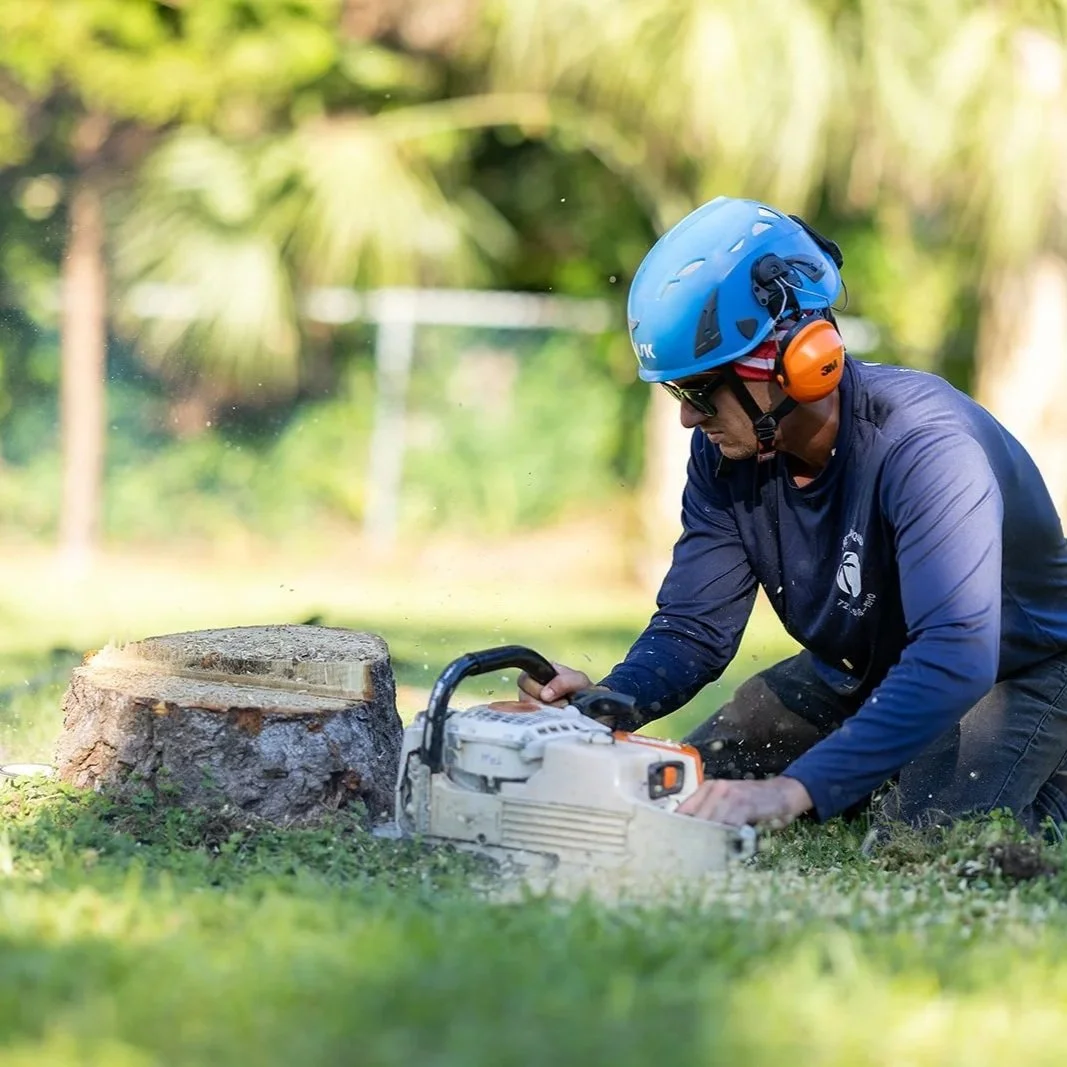
Over time, decaying roots create underground pockets of instability, leading to uneven ground that develops gradually and often without immediate warning signs.
A tree stump may look like a harmless leftover once the tree is gone, but what sits above ground rarely tells the full story. Beneath that weathered surface, root systems often remain alive far longer than homeowners expect. Even after a tree has been cut, its roots can continue storing energy, slowly decompose, shift soil, and interact with nearby plants and structures. In many yards, those roots extend well beyond the visible stump, weaving under lawns, garden beds, patios, and even shallow utility lines. Over time, decaying roots create underground pockets of instability, leading to uneven ground that develops gradually and often without immediate warning signs.
Stump removal addresses these below-ground issues directly rather than leaving them to progress quietly. Grinding reduces the visible portion of the stump, but deeper root decay continues unless addressed as part of a broader plan. In real properties, untreated root systems frequently interfere with new landscaping, cause turf to thin or sink, and complicate drainage patterns. Homeowners may blame poor soil or irrigation problems when the real culprit traces back to a stump left behind years earlier. Removing or properly managing the stump interrupts that chain reaction, stabilizing the soil and restoring predictable conditions that support healthy growth and long-term landscape plans.
How Stumps Invite Pests and Unwanted Wildlife
Decaying wood attracts life, and not always the kind homeowners appreciate. Old stumps become natural shelters for termites, carpenter ants, beetles, and other wood-boring insects that thrive in moist, decomposing material. Once established, those pests rarely stay contained within the stump. From years of experience, infestations often migrate outward, eventually reaching fences, decks, sheds, and even nearby structures. The stump becomes a staging area, quietly supporting populations that spread with little resistance.
Rodents and small animals also take advantage of stumps as cover. Hollowed sections provide protection from predators and weather, creating nesting opportunities close to homes. As populations grow, damage spreads to lawns, gardens, and irrigation systems. Homeowners dealing with recurring pest issues often overlook the stump as a root cause, focusing instead on surface treatments that never fully solve the problem. Stump removal disrupts that habitat entirely, cutting off shelter and food sources at the origin rather than treating symptoms after pests have already spread throughout the property.
Safety Risks That Develop Over Time
A stump may seem stable at first glance, but changing conditions turn it into a safety concern over time. Wood softens as it decomposes, making the surface uneven and unpredictable. Children playing, guests walking through the yard, or homeowners mowing the lawn may misjudge footing, leading to trips and falls. Injuries tied to stumps often occur years after a tree was removed, long after the hazard faded from active awareness.
Ground settling around stumps adds another layer of risk. As roots decay underground, soil compacts unevenly, forming depressions that collect water or create hidden holes beneath grass. Mowers catch edges, ankles twist unexpectedly, and landscaping equipment sustains damage. In properties where outdoor use matters, such as rental homes or family yards, these risks compound over time. Addressing stump removal early restores a level surface that behaves predictably under foot traffic, reducing liability and preventing injuries that often catch property owners by surprise.
Why Grinding Alone Does Not Always Solve the Problem
Stump grinding serves a useful purpose, but many homeowners misunderstand what it accomplishes. Grinding removes the visible stump down to a certain depth, usually several inches below grade. That process leaves behind a mixture of wood chips and soil that eventually decomposes. While grinding improves appearance and makes mowing easier, it does not fully eliminate root systems or address deeper structural concerns beneath the surface.
In practical terms, grinding works best when combined with thoughtful follow-up. Without proper backfilling, soil compaction, and monitoring, the area may sink as remaining roots decay. Landscapes installed immediately after grinding often struggle as organic material breaks down, robbing surrounding plants of nitrogen and moisture. Stump removal that includes addressing root zones and soil stabilization provides a more durable solution, especially when future planting, hardscaping, or grading is planned. Understanding the limitations of grinding helps homeowners choose the right approach based on how the space will be used long-term.
Soil Health and Landscape Performance After Stump Removal
Healthy soil supports predictable plant growth, drainage, and stability. Old stumps interfere with all three. As wood decomposes, it alters soil composition, changing nutrient balance and moisture retention. Grass may thin, shrubs struggle, and garden beds refuse to thrive in areas influenced by decaying root mass. These problems rarely resolve on their own because the source remains buried beneath the surface.
Stump removal improves soil consistency by removing decomposing material that disrupts root development for new plants. Once cleared, soil can be amended properly, compacted correctly, and graded to support drainage patterns that benefit the entire yard. Landscapers frequently encounter planting failures tied directly to old stumps that were ground but not fully managed. Removing the stump allows soil to behave uniformly, creating a stable foundation for lawns, gardens, and outdoor features that perform as intended over many seasons.
Drainage Issues Linked to Forgotten Stumps
Water follows the path of least resistance, and decaying roots create channels that redirect moisture in unintended ways. Over time, water pools near stumps, saturating soil and encouraging fungal growth or rot in nearby plants. In some cases, water migrates toward foundations, walkways, or retaining walls, causing secondary damage unrelated to the original tree removal.
Stump removal restores natural drainage patterns by eliminating obstructions below grade. Proper soil restoration following removal allows water to move evenly through the landscape rather than collecting in pockets created by decomposing wood. Homeowners often notice improved drainage and reduced standing water after stumps are addressed, even without other changes. Addressing the stump removes a variable that quietly undermines drainage systems designed to protect the property.
Long-Term Property Use and Future Projects
Property needs change over time. Lawns become patios, gardens expand, fences shift, and outdoor living spaces grow more complex. Stumps left behind limit flexibility by occupying valuable underground real estate. Attempting to build over or around them complicates projects, increases labor costs, and introduces uncertainty into construction plans.
Stump removal clears the way for future improvements without hidden obstacles. Contractors can excavate, grade, and build with confidence when the subsurface remains free of decaying wood and unpredictable voids. Homeowners planning long-term upgrades often regret leaving stumps in place once projects begin. Addressing stump removal early supports adaptability, allowing landscapes to evolve without unexpected setbacks tied to old tree remnants.
Environmental Responsibility and Controlled Decomposition
Leaving a stump to decay naturally may seem environmentally friendly, but uncontrolled decomposition creates localized issues that spread outward. Fungal growth, pest migration, and soil instability affect surrounding areas rather than remaining contained. Responsible stump removal manages decomposition in a controlled way, allowing organic material to break down where appropriate and soil to recover uniformly.
Professionally managed stump removal recycles wood material properly while restoring balance to the surrounding environment. Mulch generated through grinding can be reused intentionally rather than left to decompose unevenly in place. Controlled removal supports healthier ecosystems within residential landscapes by eliminating concentrated decay zones that disrupt plant health and invite pests. Taking a proactive approach balances environmental considerations with practical property management.
FAQs
What is the difference between stump removal and stump grinding?
Stump grinding removes the visible portion of the stump below ground level, while stump removal addresses the entire stump and major root systems. Removal provides a more complete solution when future landscaping or construction is planned.
Can pests really spread from an old stump to my home?
Decaying stumps attract insects that often migrate to nearby wood structures. Over time, infestations move beyond the stump, increasing the risk of damage to fences, decks, or buildings.
How long does it take for a stump to fully decay if left alone?
Natural decay can take several years depending on tree species, size, and moisture levels. During that time, soil instability, pest activity, and drainage issues often develop.
Will grass grow normally over a ground stump area?
Grass struggles over ground stumps because decomposing wood alters soil nutrients and moisture balance. Proper soil restoration after stump removal supports healthier turf growth.
Is stump removal necessary if the stump is not visible?
Even hidden stumps affect soil stability, drainage, and pest activity. Addressing them prevents long-term problems that surface gradually across the property.
