
Understanding Tree Cabling and Bracing: An Overview for Largo, FL Homeowners
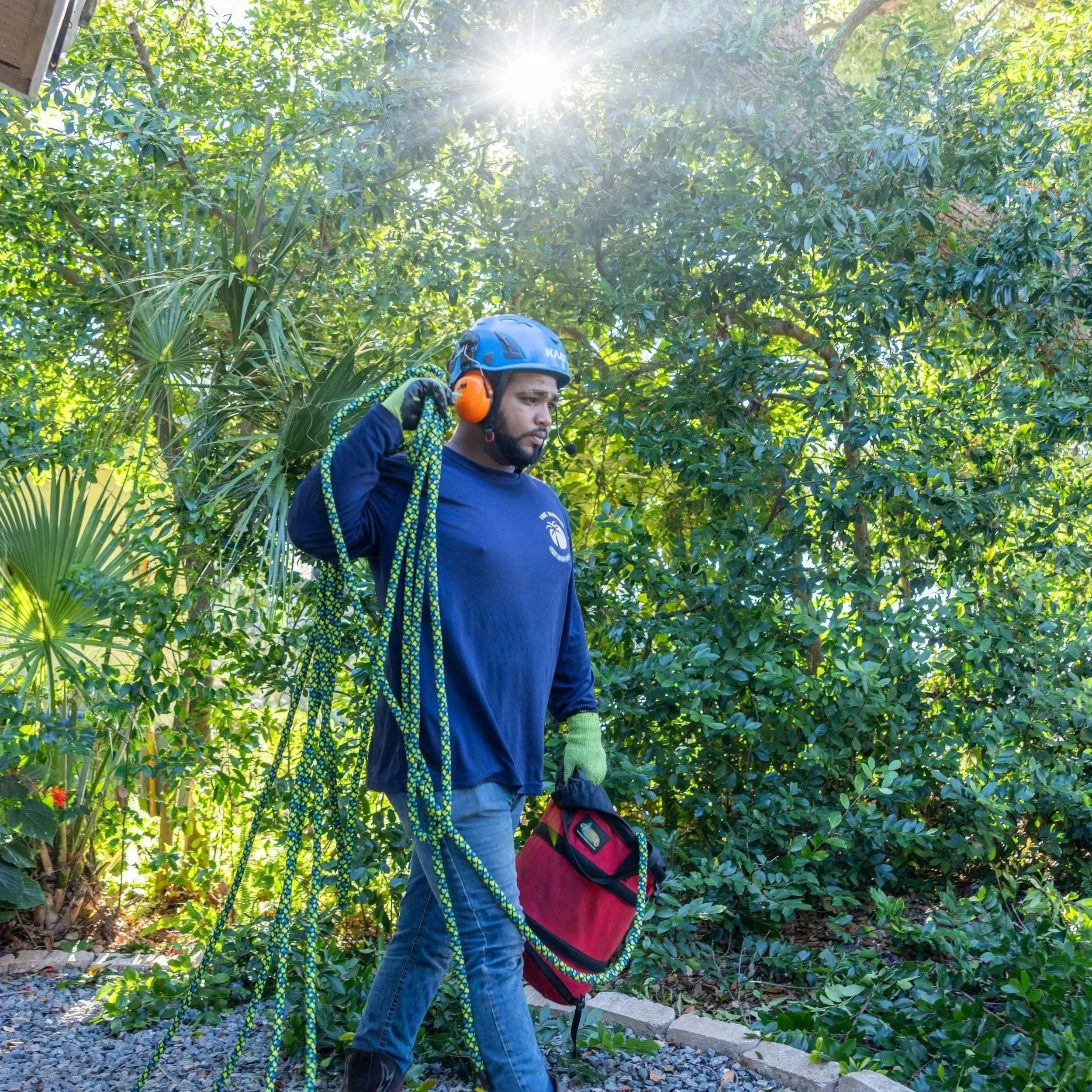
Cabling and bracing help protect Largo trees by supporting weak limbs and reducing the risk of storm-related failure.
Introduction: Why Tree Cabling and Bracing Matter in Largo, FL
Trees play a defining role in how Largo neighborhoods look, feel, and function. Mature live oaks stretch wide over homes and streets, palms frame yards and pool areas, and long-established canopies provide shade that makes Florida’s heat more manageable. These trees are not just decorative. They contribute to cooling, privacy, wildlife habitat, and long-term property value. At the same time, many of them grow very close to houses, driveways, patios, screen enclosures, and overhead utilities, which means their structural condition directly affects safety.
When trees develop structural weaknesses, the risk does not always announce itself dramatically. Problems often develop slowly. A branch union tightens over decades. A limb stretches farther than the wood was designed to support. Small cracks form during storms and then close back up, only to widen again later. By the time obvious damage appears, the tree may already be one strong wind away from failure. This is where tree cabling and bracing become essential tools for Largo homeowners who want to manage risk without automatically resorting to removal.
Cabling and bracing are often misunderstood as emergency fixes used only when a tree is about to split apart. In reality, they are most effective when used proactively as part of a long-term tree care strategy. When combined with proper pruning, routine inspections, and realistic expectations, these systems can reduce stress on vulnerable areas and extend the safe life of valuable trees. Understanding what cabling and bracing actually do, when they make sense in Largo’s climate, and when they do not, is key to making responsible decisions about tree care.
Defining Tree Cabling and Bracing in Practical Terms
Tree cabling involves installing high-strength cables between major limbs or leaders to limit their movement under load. The purpose is not to freeze the tree in place. Trees need to move. Controlled movement allows them to adapt and strengthen over time. Cabling works by distributing stress across multiple parts of the tree so that no single attachment point absorbs the full force of wind or weight.
Bracing serves a different function. Bracing uses rigid hardware such as threaded rods or bolts that pass through weak branch unions or cracked trunk sections. Where cabling manages movement, bracing physically holds compromised parts together. It is most often used when a tree has already shown signs of separation, such as a crack forming between codominant stems. In many cases, arborists use both systems together, bracing the defect itself and cabling higher in the canopy to reduce the forces acting on it.
Modern cabling and bracing systems rely on engineered materials installed according to arboricultural standards. These systems do not fix decay, cure disease, or make a tree indestructible. What they do is reduce the likelihood of sudden structural failure, especially in trees that still provide significant benefits to a property and can remain viable with proper support.
Why Cabling and Bracing Is Especially Relevant in Largo
Largo’s subtropical climate creates ideal conditions for fast tree growth, but that growth comes with tradeoffs. Warm temperatures and regular rainfall push canopies to fill out quickly, adding weight faster than the supporting wood sometimes adapts. Summer thunderstorms bring repeated wind loading, often from shifting directions. Seasonal tropical systems add sustained winds and saturated soil conditions that weaken root anchoring just as canopies are under stress.
Many structural failures do not occur during a single dramatic storm. Instead, small internal fractures form during repeated events. These fractures may not be visible from the ground and may not cause immediate limb loss. Over time, however, they accumulate, and a later storm finishes the process. For Largo homeowners, this means that waiting for obvious damage is not a reliable strategy for managing risk.
Tree cabling and bracing help address this reality by reducing stress on known weak points before failure occurs. For trees with heavy limbs over roofs, driveways, pools, or lanais, controlling movement can significantly lower the chance of damage. From a practical standpoint, preventive support often costs less than emergency cleanup after a failure and allows homeowners to preserve the shade and character that mature trees provide.
Understanding Tree Structure and Common Weaknesses
A basic understanding of tree structure helps explain why cabling and bracing are recommended in certain situations. The trunk acts as the central support column, transferring load from the canopy down to the roots. Scaffold branches form the main framework that spreads outward, supporting secondary branches and foliage. Where those branches connect to the trunk or to each other, strength varies depending on angle, spacing, and growth history.
Common structural defects in Largo trees include codominant stems, where two or more trunks grow together without a clear central leader. These unions often include bark, which prevents the formation of strong wood between the stems. Long, horizontal limbs that extend far from the trunk create leverage, increasing stress at their attachment points. Leaning trees or uneven canopies shift the center of gravity, placing additional strain on certain areas during wind events.
These issues often develop gradually and can exist for years before causing visible problems. Arborists consider cabling and bracing when these defects indicate elevated risk, but the tree still has enough sound structure to justify preservation.
How Florida’s Climate Influences Structural Failure
Florida’s climate influences not just how trees grow, but how they fail. Rapid growth often produces wood that is less dense than that of trees growing in cooler climates. Canopies become heavy quickly, and storms repeatedly load and unload the same attachment points. Saturated soils reduce root stability, while wind pushes against large crowns.
Failures may be delayed rather than immediate. A crack that forms during one storm may not lead to limb loss until months or even years later. For Largo homeowners, this makes proactive assessment important. Tree cabling and bracing are not about overreacting to every defect. They are about addressing known structural vulnerabilities before they progress to failure.
Types of Tree Support Systems Used in Largo
Static steel cabling systems are the most traditional option and remain widely used in Largo. These systems use galvanized or extra-high-strength steel cables anchored into major limbs. They provide predictable performance under sustained stress and are commonly recommended for large, mature trees such as live oaks with heavy limbs over structures. Because trees continue to grow, these systems require periodic inspection to ensure hardware placement and tension remain appropriate.
Dynamic cabling systems use flexible synthetic materials that allow controlled movement. Rather than rigid restraint, these systems support weak limbs while allowing natural sway. In windy environments, this flexibility can reduce shock loads during gusts. Arborists may recommend dynamic systems for trees that still have good structural potential and benefit from movement-based strengthening.
Bracing rods and bolts provide internal stabilization at cracked or weak unions. These are typically used alongside cabling to address existing defects while reducing future stress. Guying systems are used mainly for young or recently transplanted trees, while propping supports very low, heavy limbs in mature trees when other options are limited.
When Cabling or Bracing Makes Sense
Homeowners may notice warning signs such as visible cracks, sagging limbs, excessive movement during moderate winds, or changes in posture after storms. Trees growing close to homes or driveways deserve closer attention, especially if structural defects are present.
A professional risk assessment considers both the tree’s condition and what it could hit if it fails. Arborists examine branch unions, trunk integrity, canopy balance, and root stability. Cabling and bracing are recommended when they can meaningfully reduce risk without masking more serious problems. When decay or root failure is extensive, removal may be the safer option.
How Tree Cabling Is Installed
Installation begins with careful planning. The arborist identifies which limbs need support, selects anchor points, and determines cable placement based on expected loads and wind exposure. Branch diameters are measured to size hardware correctly.
During installation, arborists access the canopy using professional climbing systems or aerial lifts. Hardware is installed, cables are attached, and tension is set to allow controlled movement without excessive restriction. After testing the system, the site is cleaned up, and the homeowner is shown where cables are located and how often inspections should occur.
How Tree Bracing Is Installed
Bracing focuses on stabilizing a specific defect. Arborists identify the weak point, drill precisely sized holes, and insert rods or bolts to draw separated sections together. Placement and tension are critical to avoid creating new stress points.
Bracing is often paired with pruning and cabling to reduce leverage forces acting on the repaired area. After installation, arborists document the work and recommend monitoring schedules to address changes over time.
Benefits for Largo Properties
Tree cabling and bracing improve safety by reducing the chance of sudden limb or trunk failure. Homes, vehicles, pool enclosures, and outdoor living areas face less risk. Mature trees can often be preserved rather than removed, maintaining shade and neighborhood character.
There are also economic and environmental benefits. Preventing storm damage avoids repair costs, preserves property value, and maintains canopy cover that supports cooling and wildlife. Across neighborhoods, responsible tree care contributes to a safer, more resilient urban forest.
Choosing the Right Professional
Tree cabling and bracing should never be a DIY project. Improper installation can worsen defects and create a false sense of security. Homeowners should work with ISA Certified Arborists who have experience with support systems, proper insurance, and familiarity with Largo’s climate and common species.
Asking clear questions about materials, standards, maintenance expectations, and long-term outlook helps set realistic expectations and ensures the tree is being managed responsibly.
Conclusion: Making Informed Decisions About Tree Cabling and Bracing in Largo
Tree cabling and bracing offer Largo homeowners a way to balance safety and preservation. When used thoughtfully, these systems reduce stress on vulnerable areas and extend the useful life of valuable trees. Success depends on professional evaluation, correct installation, integration with pruning, and ongoing monitoring. By acting proactively and understanding both the benefits and limitations of support systems, homeowners can continue enjoying the shade, character, and value their trees provide while responsibly managing risk.
FAQs About Calling a Professional for Tree Pruning in Largo, FL
Most established trees benefit from inspection every one to three years, depending on species, size, and location. Trees near homes or streets often need more frequent attention due to a higher risk.
Large dead or hanging limbs, sudden leaning, cracked branches, visible decay, storm damage, or limbs near power lines all warrant prompt professional evaluation.
Small trees can be pruned safely from the ground when branches are thin, reachable, and far from structures or utilities. Ladders, chainsaws, and heavy limbs move pruning into professional territory.
Look for certified arborists, proof of insurance, clear written estimates, and a willingness to explain methods. Avoid companies that recommend topping or rush decisions.
