
The Science Behind Tree Cabling: How It Works to Protect Your Trees
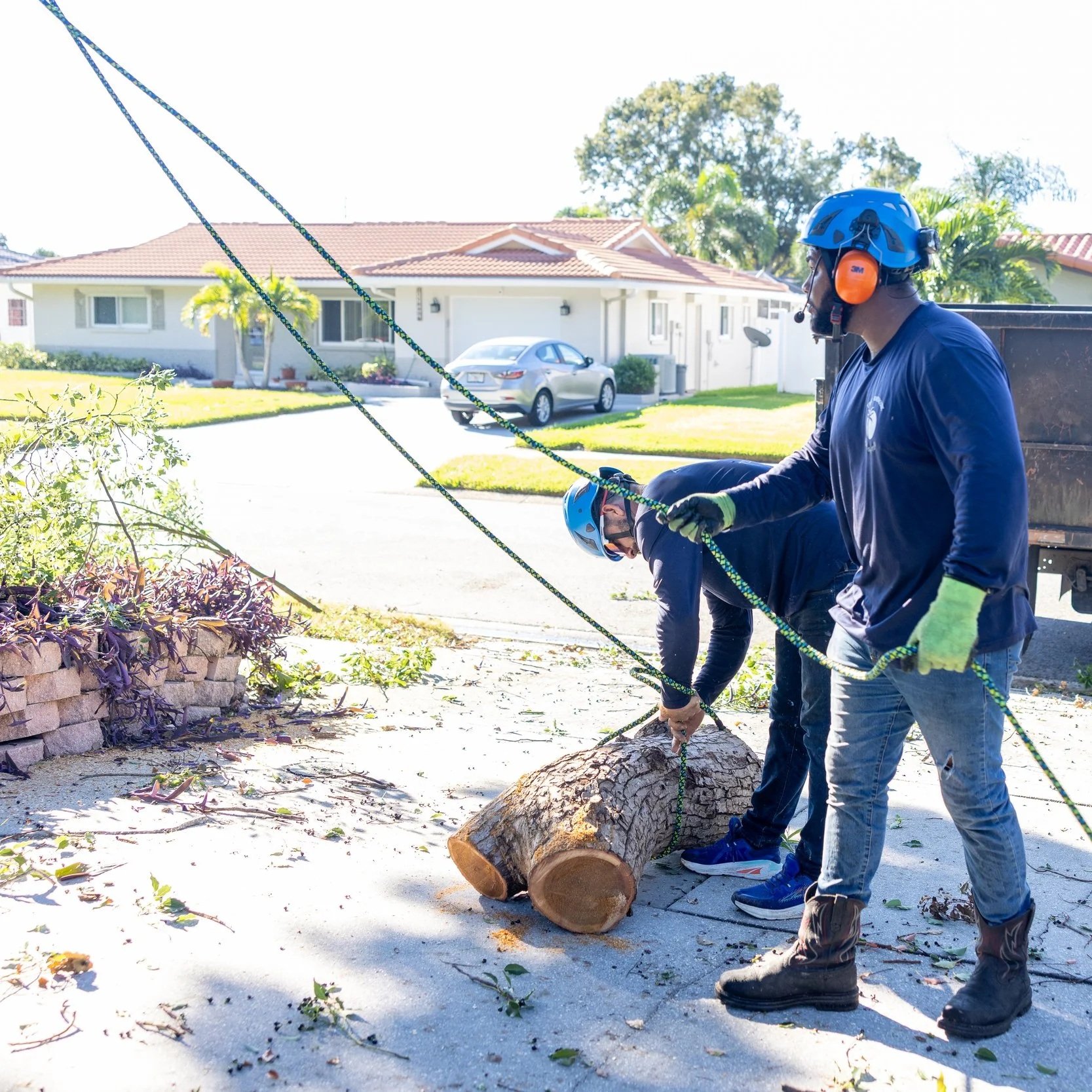
Cabling doesn’t stop movement—it safely manages it, reducing stress on vulnerable limbs while keeping trees healthy.
Understanding Tree Cabling: What It Is and Why It Matters
Tree cabling is a structural support method used in professional arboriculture to reduce the likelihood of limb or stem failure in trees that show identifiable weaknesses. Rather than attempting to fix decay or alter how a tree grows, cabling focuses on managing the external forces acting on the tree. These forces include wind, gravity, canopy weight, and seasonal loading from rain or foliage. When unmanaged, those forces concentrate at weak points such as co-dominant unions or long, overextended limbs, increasing the chance of failure.
At its core, tree cabling involves installing high-strength steel or engineered synthetic cables between selected limbs or stems. The purpose is not to make the tree rigid or immobile. Trees need movement to stay healthy. Instead, cabling limits excessive motion during high-load events, preventing stress from overwhelming a single vulnerable attachment. From a scientific perspective, cabling redistributes mechanical stress across stronger portions of the structure, reducing peak loads at failure-prone areas. In regions like Largo, FL, where storms, wind shifts, and saturated soils are common, this approach allows mature trees to coexist more safely with homes, driveways, and pedestrian areas.
Tree cabling differs from bracing and guying, which are often confused with it. Bracing uses rigid threaded rods installed through stems or trunks to reinforce weak unions that have already begun to crack or separate. Guying anchors trees to the ground and is typically reserved for newly planted or recently transplanted trees. Cabling, by contrast, operates within the canopy and focuses on load sharing rather than anchoring or rigid reinforcement.
When Tree Cabling Is Needed: Common Structural Problems
Certain growth patterns and defects regularly lead arborists to recommend cabling. One of the most common is the presence of co-dominant stems, where two or more trunks grow upward together without a clear central leader. These unions often contain bark, which prevents strong wood fiber connections from forming. Over time, that bark inclusion acts like a wedge, increasing the likelihood of splitting under load. Long lateral limbs that extend far from the trunk create another frequent issue, as their length magnifies leverage and concentrates stress at the attachment point.
Storm damage can also leave trees structurally compromised, even when they remain alive and leafed out. A limb that survives a major storm may develop internal fractures that weaken it for future events. Importantly, a tree can look healthy from a foliage standpoint while still carrying significant structural risk. Arborists assess these conditions by examining limb angles, bark ridges, cracks, decay indicators, and the tree’s overall balance. Just as important is what lies beneath the tree. A weak limb over a roof or driveway presents a much higher level of concern than the same defect over open lawn.
Tree cabling is typically recommended when removal would be excessive, but leaving the tree unsupported presents unacceptable risk. It is a mitigation strategy, not a guarantee. No cabling system can eliminate failure potential, but it can significantly reduce the likelihood of sudden, high-consequence failures when applied appropriately.
The Role of Tree Cabling in Modern Arboriculture
In modern arboriculture, tree cabling is viewed as one component of a broader tree management strategy. Alongside structural pruning, soil care, and health monitoring, cabling helps extend the useful life of mature or high-value trees in built environments. Urban and suburban settings place greater stress on trees than natural forests do. Open lawns, compacted soils, altered wind patterns, and nearby structures all change how trees grow and respond to force.
Many long-standing trees in parks, campuses, and historic properties remain in place today because cabling allows them to age more safely within developed spaces. Industry standards play a major role in guiding this work. In North America, ANSI A300 standards outline acceptable materials, placement practices, and inspection requirements. These guidelines balance mechanical performance with biological considerations, aiming to support the tree while minimizing long-term harm. Adhering to recognized standards also supports predictable outcomes and responsible risk management.
Benefits and Limitations of Tree Cabling
When applied correctly, tree cabling offers clear benefits. It reduces the risk of limb or stem failure, helping protect people, structures, and nearby vehicles. It allows property owners to preserve mature trees that provide shade, aesthetic value, and environmental benefits such as temperature moderation and wildlife habitat. In many cases, cabling buys time. That time allows the tree to adapt, strengthen wood fibers, compartmentalize minor damage, or continue providing value while long-term plans are made.
At the same time, cabling has limits. It cannot reverse decay, rebuild lost wood, or compensate for severe root failure. Improper installation can introduce new problems by creating stress concentrations, restricting natural movement, or causing excessive wounding. For those reasons, cabling works best as part of an integrated care plan that includes pruning, monitoring, and periodic reassessment rather than as a one-time solution.
The Physics Behind Tree Cabling
Trees constantly manage physical forces. Gravity pulls downward, wind applies lateral pressure, and seasonal factors add weight to the canopy. Load describes the forces acting on a limb, while stress refers to how those forces are transmitted internally through the wood fibers. Strain is the visible bending or deformation that occurs when a limb flexes. Longer and heavier limbs create greater leverage, increasing stress at attachment points.
Structural defects interrupt normal stress distribution. Cracks, decay, and narrow unions concentrate loads in smaller areas of sound wood, increasing the risk of failure. Tree cabling alters how those loads move through the structure. By linking a weaker limb to a stronger one, the cable allows both to share the force rather than concentrating it at a single vulnerable point. Cable placement, height, and angle all influence how effectively this redistribution occurs, which is why design relies on experience and an understanding of force vectors rather than guesswork.
Dynamic vs. Static Cabling Systems
Cabling systems fall into two general categories. Static systems use steel cables to provide firm support and significantly limit movement. They are often selected for severe defects requiring immediate strength. Dynamic systems use flexible synthetic materials that stretch under load, allowing more natural sway while absorbing energy during gusts.
Each approach has tradeoffs. Static systems provide predictable restraint but can concentrate forces during extreme events. Dynamic systems support adaptive movement but may not provide sufficient protection for very heavy limbs or advanced defects. Arborists select the system type based on tree condition, defect severity, surrounding targets, and acceptable risk levels.
The Biology Behind Cabling Decisions
Trees grow in response to light, gravity, and competition. Forked stems, uneven crowns, and long lateral branches are often biologically normal outcomes, but they can become structural liabilities in open, developed environments. Included bark forms when stems grow together without interlocking wood fibers, creating inherently weak unions.
Cabling compensates for these biological limitations by providing supplemental support where natural structure falls short. It is particularly useful in suburban settings like Largo, FL, where trees experience greater wind exposure and uneven growth patterns than they would in a forest. Arborists also consider species traits, since wood strength, flexibility, and decay resistance vary widely and influence how well a tree responds to support systems.
Core Components of a Cabling System
A complete cabling system includes cables, anchors, and connection hardware. Steel cables offer strength and durability, while synthetic systems offer flexibility and reduced visual impact. Anchors may be lag hooks or through-bolts, selected based on limb size and load requirements. Thimbles protect cables from abrasion at connection points, and grips or connectors secure the system under tension.
Sizing and material selection matter. Undersized components can fail under load, while oversized hardware causes unnecessary wounding. Arborists incorporate safety factors to account for unpredictable forces, growth, and environmental exposure, balancing mechanical performance with biological tolerance.
Assessment and Design
Before installation, arborists conduct a thorough assessment. Visual inspection examines the root flare, trunk, major limbs, and crown balance. Tools such as mallets, binoculars, or resistance drills help evaluate internal condition when needed. Risk assessment considers both the likelihood of failure and the severity of consequences based on nearby targets.
Design decisions include cable placement, number of cables, and whether bracing or pruning should be combined with cabling. Cables are typically installed high in the crown where leverage is greatest. Systems are designed with future growth in mind, allowing room for expansion and scheduling regular inspections.
Installation and Maintenance
Professional installation involves careful site preparation, safe canopy access, precise drilling, and controlled tensioning. Cables are adjusted so they engage under high load but allow normal movement during everyday conditions. After installation, documentation supports future inspections and adjustments.
Maintenance is essential. Annual or post-storm inspections check hardware condition, tension, and tree response. As trees grow, cables may need to be retensioned or replaced. In some cases, changes in tree condition eventually make removal the safer option, even when cabling was once effective.
Tree Cabling as Part of Long-Term Tree Care
Cabling works best when combined with structural pruning, soil care, and health monitoring. Reducing crown weight lowers loads on the system, while healthy roots and soil support overall stability. Cabling should be viewed as an adaptive management tool rather than a permanent fix.
Tree Cabling FAQs in Largo, FL
A professional risk assessment evaluates structural defects, tree health, and nearby targets. Cabling is often recommended when weaknesses can be managed without removing the tree, while pruning alone may not sufficiently reduce risk.
When designed and installed correctly, cabling is generally safe. Arborists minimize wounding and monitor tree response over time. Improper installation increases the risk of damage.
Lifespan depends on materials, climate, and maintenance. Steel systems often last many years, while synthetic systems may have shorter service lives. Regular inspections are essential.
Tree cabling is rarely appropriate as a DIY project. Proper design, safe installation, and biological understanding require professional training and equipment.
