
The Environmental Impact of Tree Cabling & Bracing
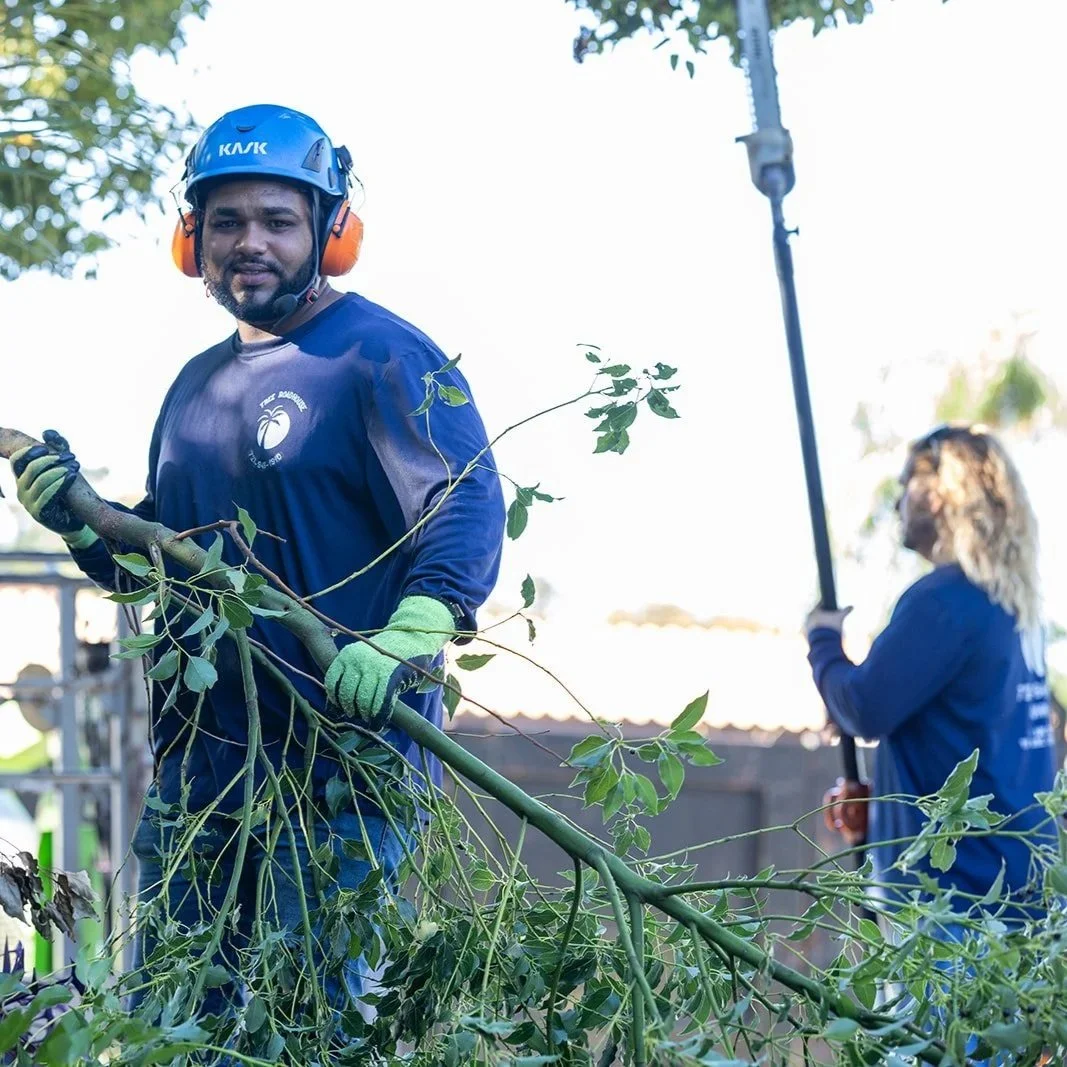
Arborist installing tree cabling and bracing to stabilize mature tree, supporting safety, canopy preservation, and environmental health.
Tree cabling and bracing are often viewed as purely technical fixes—ways to keep heavy limbs from breaking or split trunks from failing. In reality, these practices reach far beyond safety and liability. They influence how long mature trees remain in the landscape, how much shade and carbon storage they provide, and how well local ecosystems continue to function. When used thoughtfully, cabling and bracing can be powerful tools for sustainable tree stewardship. When misused, they can create new problems for both trees and the environments they support.
Understanding the environmental impact of these techniques requires looking beyond hardware and into tree biology, urban ecology, and long-term land management goals.
Understanding Tree Cabling, Bracing, and the Environment
Tree cabling and bracing are arboricultural techniques designed to reduce the risk of structural failure in trees, especially those near homes, roads, or public spaces. Cabling typically involves installing flexible steel or synthetic cables between major limbs or from a limb to the trunk. Bracing uses rigid rods or threaded bolts to stabilize cracks, splits, or weak unions within the trunk or branches.
Although these systems are primarily installed for safety, they also shape how long a tree remains standing and functional. By extending the lifespan of mature trees, cabling and bracing help preserve canopy cover, wildlife habitat, and ecosystem services like shade, air filtration, and stormwater interception. These benefits ripple outward, influencing soil health, biodiversity, and even neighborhood microclimates.
That’s why environmental impact matters. Even minor structural interventions change how a tree grows, how it responds to wind, and how it allocates energy. In some cases, cabling is a more sustainable alternative to removal. In others, it can artificially prolong a declining tree and delay healthier succession. Environmentally informed decisions balance safety, liability, and ecological value rather than focusing on any one factor in isolation.
Basics of Tree Biomechanics and Natural Stability
Trees are not static structures. They are dynamic organisms that distribute mechanical stress through wood fibers, branch architecture, and root systems. Tapered trunks, flexible branches, and dense root networks all contribute to stability. Trees also adapt to stress through growth responses such as reaction wood and root expansion.
Because of this adaptability, many trees that look “odd” are actually stable. Leaning trunks, asymmetrical crowns, or long limbs can be structurally sound, especially if those forms developed gradually. Misinterpreting natural growth as a defect can lead to unnecessary cabling, increased costs, and avoidable environmental disturbance.
True structural concerns typically include co-dominant stems with narrow crotch angles, included bark, major cracks, long lateral limbs with heavy end weight, and damage from past storms. In these cases, cabling can reduce risk while preserving an ecologically valuable tree. Certified arborists trained in tree risk assessment are best equipped to distinguish real hazards from harmless quirks.
Urban environments complicate matters. Compacted soils, restricted root space, heat islands, altered wind patterns, and pollution all reduce a tree’s natural stability. Trees that would be fine in a forest may develop problems in a parking lot or streetscape. This creates an environmental paradox: urban trees provide critical ecosystem services, yet they often require human intervention to survive long enough to deliver those benefits.
Ecological Benefits of Tree Cabling & Bracing
One of the strongest environmental arguments for cabling and bracing is longevity. Mature trees store far more carbon and provide more shade and habitat than young replacements. Extending the lifespan of a large oak, maple, or plane tree by even 10 or 20 years preserves decades of accumulated ecosystem value.
These trees regulate temperatures, reduce energy use in nearby buildings, filter air pollutants, and intercept stormwater. They also support complex food webs. Cavities, deadwood, and decayed sections—often the same areas associated with structural weakness—are prime habitat for birds, bats, insects, fungi, and other organisms.
By stabilizing risk-prone limbs instead of removing entire trees, cabling allows these habitat features to remain in place. This approach strikes a balance between protecting people and maintaining biodiversity.
Cabling and bracing also reduce the environmental costs of removal. Cutting down a mature tree releases stored carbon, disturbs the soil, and generates emissions from chainsaws, chippers, trucks, and stump grinders. While support systems have their own footprint, it is usually small compared with the benefits of keeping a large, functioning tree in place.
In cities and suburbs, continuous canopy cover is especially valuable. Abrupt tree loss removes shade and cooling overnight, while replacements may take decades to provide similar benefits. Cabling and bracing, when used strategically, support long-term canopy stability and urban forestry goals.
Potential Negative Environmental Impacts
Despite their benefits, cabling and bracing are not environmentally neutral. Installation often requires ladders, bucket trucks, or foot traffic in the root zone. Soil compaction reduces oxygen availability, limits water infiltration, and weakens roots. Drilling for bracing rods can also disturb soil and sever fine roots.
Improper installation creates even bigger problems. Over-tightened cables, undersized hardware, drilling into decayed wood, or failing to adjust systems as trees grow can lead to new wounds, accelerated decay, and eventual failure. Embedded hardware can restrict vascular flow and reduce long-term vigor.
Material choice matters too. Traditional galvanized steel carries environmental costs from mining, manufacturing, and transport. While small on a per-tree basis, these impacts add up in large municipal programs.
There is also a long-term ecological question. Cabling can delay natural succession by keeping declining trees standing longer than they would otherwise survive. In some contexts, this is beneficial. In others, it may slow the establishment of younger, more climate-resilient species.
Choosing Environmentally Responsible Materials
Steel cables are strong and durable, but have a higher production footprint. Modern synthetic systems allow more natural limb movement and reduce stress concentrations, though they can degrade under UV exposure and are harder to recycle.
Longevity is a key environmental factor. Hardware that lasts longer reduces replacement frequency, soil disturbance, and resource use. Galvanized steel, stainless steel, and UV-stabilized synthetics all perform well under different conditions.
Hardware design also affects tree health. Appropriately sized bolts, rounded edges, thimbles, and allowances for future growth reduce wounding and long-term decay. Thoughtful design helps preserve both the tree and its ecological contributions.
Where possible, recycled steel and locally produced components reduce environmental costs. While reuse of critical hardware is rarely safe, non-critical components can sometimes be repurposed responsibly.
Best Practices for Environmentally Conscious Installation
Access planning is one of the simplest ways to reduce environmental impact. Mapping the critical root zone and keeping heavy equipment outside it protects soil structure. When access within the root zone is unavoidable, ground protection mats or plywood distribute weight and reduce compaction.
Pruning should be conservative. Removing only small, weak, or crossing branches preserves photosynthetic capacity and wildlife habitat. Timing work outside nesting seasons and disease-prone periods further minimizes disruption.
Cables should be placed to allow natural movement, typically about two-thirds of the distance from the defect to the limb tip. Proper tensioning reduces extreme stress without eliminating sway, allowing the tree to strengthen its tissues over time.
Cabling works best as part of a holistic care plan that includes soil improvement, mulching, watering, and selective pruning. Healthier trees provide more ecosystem services and require fewer interventions over time.
Monitoring, Maintenance, and Adaptive Management
Cabling and bracing are not “install and forget” systems. Annual inspections and post-storm checks are essential. Hardware can loosen, corrode, or become embedded as trees grow.
Inspections evaluate cable tension, hardware integrity, wound closure, new cracks, and decay. Regular monitoring preserves the tree’s ecosystem services and prevents minor issues from escalating into failures.
Tree health and site conditions change. New construction, soil disturbances, pests, or storms can alter risk levels. Adaptive management—adjusting care plans as conditions evolve—ensures interventions remain both safe and environmentally responsible.
Support systems may eventually be retired. Trees may grow stronger, or decay may progress to the point where continued support is no longer effective. These decisions should consider both safety and ecological impact.
Risk Management: Balancing Safety and Environmental Goals
Tree risk assessment evaluates the likelihood of failure, potential targets, and consequences. Environmental goals intersect with safety: higher risk may be acceptable in remote natural areas than in busy urban zones.
Cabling is often preferable to removal when it significantly reduces risk while preserving ecological value. Species, age, health, and cultural significance all factor into this decision.
In cases of advanced decay or repeated failures, removal may be more sustainable. Planned removal, combined with diverse replanting, can yield better long-term environmental outcomes than indefinite artificial support.
Certified arborists are essential for making these judgments. Complex projects may also benefit from collaboration with ecologists or landscape designers.
Alternatives and Complementary Practices
Preventive structural pruning in young trees reduces the need for future cabling. Early corrections create smaller wounds and stronger branch architecture.
Sometimes the best risk reduction strategy is moving people rather than altering trees. Rerouted paths, protective barriers, or changes in site use can preserve natural structure and ecological function.
Soil and root-zone rehabilitation improves stability and resilience. Mulching, decompaction, and organic amendments enhance water infiltration, carbon storage, and root growth.
Even when cabling is used, planning for eventual replacement ensures a continuous canopy and habitat.
Ethical and Community Considerations
Many communities have tree protection ordinances or heritage tree programs. Cabling may be encouraged as an alternative to removal or may require permits.
There are also ethical questions. Is it right to prolong the life of a declining tree indefinitely? Or is it better to allow natural succession? Ethical stewardship balances safety, ecological function, and responsible resource use.
Public communication matters. Visible hardware can alarm residents. Explaining why a tree was preserved and what benefits it provides builds trust and support for sustainable tree programs.
Making an Environmentally Informed Decision
Start by documenting structural issues and environmental values. Consult a qualified arborist for a formal risk assessment and discuss all options. Weigh safety, ecological outcomes, long-term costs, and maintenance needs.
If cabling is chosen, follow best practices and commit to ongoing monitoring. Think of the intervention as a long-term relationship with the tree and the ecosystem it supports.
Conclusion
Tree cabling and bracing can be powerful tools for sustainable stewardship. They extend the life of mature trees, preserve canopy cover and wildlife habitat, and reduce unnecessary removals. When implemented thoughtfully, they enhance both safety and environmental resilience.
The key is balance. With careful planning, professional installation, responsible materials, and ongoing monitoring, cabling and bracing can support trees in a way that benefits people and the planet for generations.
Tree Cabling & Storm Protection FAQs in Florida
No. Cabling reduces risk but cannot guarantee zero damage, especially in extreme storms. It is a risk-reduction strategy, not a guarantee.
Steel systems may last 10–20 years or more; synthetic systems often have shorter lifespans. Regular inspections and adjustments extend effectiveness.
DIY cabling is strongly discouraged. Improper installation can be dangerous and ineffective. Always hire a certified arborist.
A professional arborist evaluates defect severity, decay, species, location, and risk. Minor defects may be managed with cabling; severe structural compromise often requires removal.
