
How Tree Cabling Prevents Property Damage in Florida's Storms
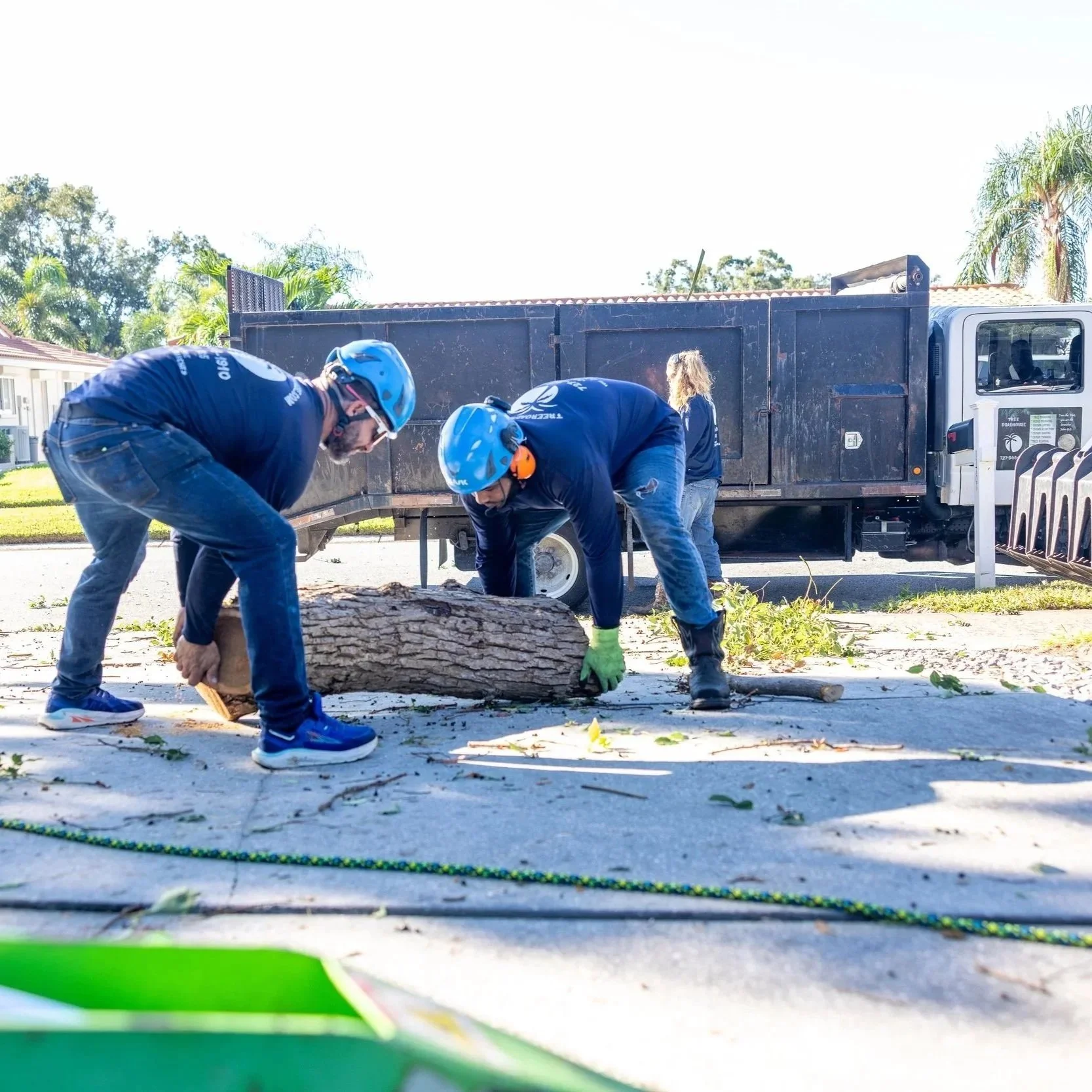
Cabling and bracing strengthen vulnerable trees, reducing the risk of property damage during Florida’s storm season.
Why Tree Cabling Matters in Florida’s Storm Season
Florida’s climate and geography make trees and property especially vulnerable during storm season. From June through November, hurricanes, tropical storms, and powerful summer thunderstorms bring high winds, heavy rainfall, and flying debris that can damage homes, vehicles, and landscaping. Saturated soils reduce root stability, and even moderate gusts can turn weak limbs into hazards. Both coastal and inland areas face these risks, though coastal properties often experience higher wind exposure.
Trees in Florida are particularly susceptible because of rapid growth, shallow root systems in sandy soils, and species traits that produce broad, heavy canopies. While trees offer shade, curb appeal, and environmental benefits, those with structural weaknesses or insufficient support can become dangerous projectiles or collapse hazards near homes, driveways, and power lines. Without proactive measures, valuable trees can quickly transform from assets into risks during storms.
Property Damage from Trees: Common Scenarios During Storms
During storms, trees can cause significant damage in several ways. Falling trunks may crush roofs or garages, large limbs can smash vehicles or tear through windows, and uprooted trees can pull up sidewalks, driveways, or underground utilities. These incidents carry financial implications, including insurance claims and emergency removal fees, as well as potential liability if a tree damages a neighbor’s property. Many of these damages are preventable with proactive tree risk management. Structural support systems, particularly cabling and bracing, are among the most effective methods for reducing the likelihood of tree failure in storms, complementing pruning and ongoing tree care.
What This Guide Will Help You Understand
This guide explains what tree cabling is, how it works during severe weather, and how Florida homeowners can decide whether it is appropriate for their property. It offers practical advice for identifying tree risks, consulting certified arborists, and prioritizing tree-safety investments. The article also covers the different types of cabling systems, installation processes, maintenance needs, cost considerations, and how cabling fits into an overall storm-preparation plan. The goal is to help homeowners protect their property and families while preserving healthy, valuable trees wherever possible.
Understanding Tree Cabling: The Basics
Tree cabling is a structural support technique in which high-strength cables are installed between major branches or stems to redistribute mechanical stress. By limiting excessive canopy movement during high winds, cabling reduces the risk of limbs splitting or breaking. While cabling cannot make a structurally weak tree completely storm-proof, it significantly lowers the chance of catastrophic failure when installed correctly.
Typical cabling components include steel or synthetic cables, hardware anchors installed into the tree, and connection points carefully chosen to address structural weaknesses. Cabling is part of a broader tree support system that may also include bracing rods in the trunk or lower limbs to secure weak crotches or split stems. These systems work together to stabilize the tree while allowing natural movement.
The primary objectives of cabling are to prevent branch or stem failure, support weak junctions, stabilize co-dominant trunks, and reduce leverage forces on attachment points during high winds. In Florida, where hurricane-force winds are common, controlling canopy movement helps prevent sudden structural failure. The goal is not rigid immobilization but controlled flexibility, so the tree can safely absorb wind energy while protecting property and nearby structures.
Cabling is one tool among several in a comprehensive risk-management strategy. Structural pruning reduces canopy weight and improves branch architecture, while full removal eliminates risk but sacrifices shade, aesthetics, and environmental benefits. Arborists often combine pruning with cabling to achieve the safest, most natural outcomes. Cabling is appropriate for valuable trees with minor structural weaknesses, historically significant or sentimental trees, and large healthy trees with some defects. Conversely, removal is the safer choice for severely decayed trunks, major root failure, or trees with advanced structural defects directly over critical structures.
How Florida’s Climate Increases the Need for Tree Cabling
Florida’s hurricanes, tropical storms, and strong squall lines create sustained high winds, gusts, and directional shifts, placing tremendous stress on tree canopies. Wind speed increases with height, making tall, mature trees particularly vulnerable. Repeated exposure to high winds weakens existing structural defects over time. A branch that survives one storm may be more likely to fail in the next, making proactive cabling an important pre-storm preparation measure.
Sandy soils often produce shallow root systems. Even trees with strong canopies may be at risk of uprooting or tilting during high winds if roots are poorly anchored. Cabling primarily addresses above-ground structure, but by limiting canopy sway and reducing leverage forces, it indirectly reduces stress on the root system. Combining cabling with soil management, proper watering, and root-zone protection improves overall stability.
Heavy rainfall weakens soil structure, reducing friction around roots and increasing the likelihood of trees leaning or uprooting. Saturated soils are particularly risky for trees near homes or on slopes. Cabling helps stabilize the canopy and reduce mechanical stress on roots. While it cannot fully prevent uprooting in extreme conditions, it reduces the risk of partial or catastrophic failures.
Urban development can create wind tunnels, exposing trees that previously grew under sheltered conditions to stronger gusts. Construction or removal of neighboring trees increases wind exposure for mature specimens. Cabling is a key mitigation strategy in these environments, helping trees adapt to new wind pressures.
Common Tree Hazards in Florida That Cabling Can Address
Co-dominant stems occur when two or more main trunks grow from the same point, creating narrow, weak unions prone to splitting. Cabling connects these stems higher in the canopy, reducing leverage on the vulnerable junction below.
Overextended lateral limbs that hang over roofs or driveways are more likely to snap during high winds. Cabling ties these limbs back to stronger parts of the tree, redistributing weight and reducing breakage risk.
Pre-existing cracks or storm damage create weak points that may reopen under new wind loads. In some cases, cabling combined with bracing rods can reinforce these compromised areas.
Leaning trees and asymmetrical canopies concentrate wind loads on certain limbs. Cabling stabilizes overweight limbs and limits sudden movement toward the lean.
Types of Tree Cabling Systems Used in Florida
Static systems use steel cables and fixed hardware to restrict movement. They are strong and durable, suited for older or high-risk trees, but require drilling and periodic adjustment.
Dynamic systems use high-strength synthetic materials that allow controlled movement. They absorb some wind energy and are less invasive, often preferred for younger or moderately sized trees.
Bracing rods reinforce weak crotches or cracks from within the trunk or limbs. In Florida, cabling and bracing are often combined for trees with serious defects.
Selecting the right system depends on species, size, health, defect type, and risk to nearby structures. Florida’s storm intensity often leads arborists to choose robust systems, especially near homes.
How Tree Cabling Is Installed
Installation begins with a professional risk assessment. The arborist evaluates tree health, structural defects, and proximity to targets like homes or power lines. Attachment points are chosen in strong, sound wood, usually high in the canopy. Hardware is selected based on tree size and expected wind loads.
Cables are installed using climbing gear or lifts. Tension is adjusted to allow controlled movement. Pruning is often done at the same time to reduce canopy weight.
After installation, the system is inspected and documented. Homeowners receive guidance on maintenance and inspection intervals.
How Cabling Reduces Storm Damage Risk
Cabling redistributes wind forces across multiple limbs or stems, reducing the likelihood of breakage at a single weak point. It limits excessive whipping motion and reduces leverage on vulnerable unions. Over time, cabling helps trees withstand repeated storm seasons and age more safely near structures.
When Florida Homeowners Should Consider Cabling
Warning signs include co-dominant trunks, deep bark inclusions, long limbs over structures, visible cracks, and uneven movement in the wind. The best time to install cabling is well before hurricane season. It is also wise to check after major storms or when landscape changes increase wind exposure.
Cabling offers a balance between aesthetics and safety, preserving shade and curb appeal while discreetly reducing risk.
Working with a Certified Arborist
Certified arborists understand Florida species, storm patterns, and proper installation standards. Homeowners should ask about certification, experience, materials, maintenance needs, and insurance. A detailed proposal should outline scope, costs, and timelines.
Tree cabling is not a one-time solution. Ongoing inspections and adjustments are essential as trees grow and hardware ages.
Maintenance, Costs, and Long-Term Value
Cabled trees should be inspected annually and after major storms. Warning signs include sagging cables, hardware pulling out, and new cracks.
Costs depend on tree size, number of cables, and access difficulty. While prices vary, cabling is far cheaper than repairing storm damage or removing large trees.
Well-maintained, supported trees preserve shade, property value, and curb appeal while reducing hazards.
Integrating Cabling into a Storm-Prep Plan
Cabling works best with structural pruning, healthy root care, and proper drainage. Arborists can help prioritize trees based on risk and proximity to structures. Educating family members and neighbors about tree safety supports shared responsibility.
Conclusion: Protecting Florida Properties While Preserving Trees
Properly installed cabling significantly lowers the risk of limb and trunk failures during Florida storms. It allows healthy but structurally compromised trees to remain safe assets rather than growing hazards. When combined with professional assessments, pruning, and ongoing maintenance, cabling becomes a powerful tool for storm preparedness.
Tree Cabling & Storm Protection FAQs in Florida
No. Cabling reduces risk but cannot guarantee zero damage, especially in extreme storms. It is a risk-reduction strategy, not a guarantee.
Steel systems may last 10–20 years or more; synthetic systems often have shorter lifespans. Regular inspections and adjustments extend effectiveness.
DIY cabling is strongly discouraged. Improper installation can be dangerous and ineffective. Always hire a certified arborist.
A professional arborist evaluates defect severity, decay, species, location, and risk. Minor defects may be managed with cabling; severe structural compromise often requires removal.
