
How Professional Tree Cabling Extends the Life of Your Favorite Trees
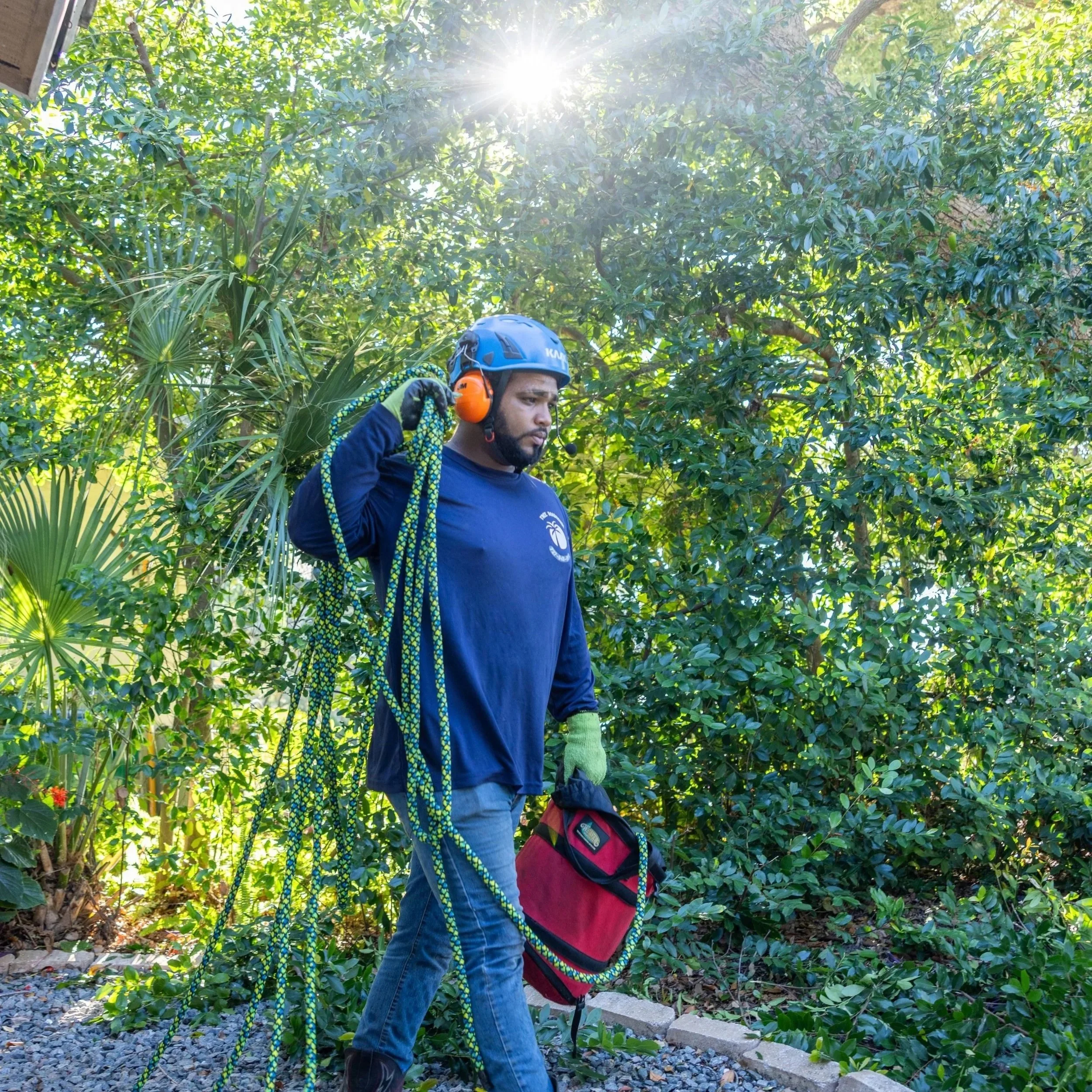
Professional tree cabling stabilizes weak limbs, helping mature trees stay healthy and thrive for years to come.
Why Tree Cabling Matters for Long-Lived, Healthy Trees
Mature trees are more than just landscaping features. They provide shade, improve air quality, increase property value, and often hold deep sentimental meaning for homeowners. When one of these trees begins to show signs of structural weakness, the instinctive response is often worry that removal is inevitable. In many cases, though, there is another option: professional tree cabling.
Tree cabling is a structural support technique used by certified arborists to help trees withstand wind, heavy foliage, snow, and other stresses. It is not a cosmetic treatment and not a quick fix. Instead, it is a carefully engineered system designed to stabilize weak limbs or trunks and reduce the likelihood of failure. When used appropriately and maintained properly, cabling can significantly extend the life of a healthy but structurally compromised tree.
This guide explains what tree cabling is, when it makes sense, how it works, and what homeowners should expect when working with a professional. It is not a do-it-yourself manual. Rather, it is meant to help you make informed decisions, understand arborists' recommendations, and protect the trees you care about most.
Defining Tree Cabling in Simple Terms
Tree cabling uses high-strength steel or synthetic cables to connect and support weak or heavy branches or multiple stems. By linking these parts together, the system allows the tree to distribute stress more evenly. This reduces strain on vulnerable unions and lowers the risk of breakage during storms or under heavy loads.
Cables are typically installed high in the canopy between major limbs or stems. In some cases, they are combined with bracing rods installed lower in the trunk or at a weak branch union. A helpful way to think about cabling is as an internal safety harness for a tree. It does not hold the tree rigid, but it limits excessive movement and helps prevent sudden, catastrophic failure.
Professional cabling follows established arboricultural standards and relies on proper placement, correct tension, suitable materials, and regular inspections. When done correctly, cabling can preserve a tree's shade, beauty, and safety while extending its useful life by many more years.
Why Extending a Tree’s Life Matters
Preserving mature trees delivers both environmental and practical benefits. Older trees store significant amounts of carbon, improve air quality, provide wildlife habitat, and manage stormwater more effectively than young trees. Their shade can reduce cooling costs for nearby homes and make outdoor spaces far more comfortable in summer.
There is also a strong financial case for preservation. Removing a large tree can be costly, especially when it is near structures or utilities. Replanting adds more expense, and a replacement tree can take decades to provide comparable shade and visual impact. Mature trees also contribute to higher property values and neighborhood appeal.
Beyond money and ecology, there is emotional value. Many trees mark milestones, frame family memories, or make a property feel like home. Cabling is often a proactive, life-extending strategy rather than a last-ditch attempt to avoid removal.
Understanding Tree Structure and Why Trees Fail
A tree’s ability to support itself depends on the strength of its trunk, major limbs, branch unions, and root system. Well-formed branch unions and balanced canopies distribute weight and dissipate wind forces through natural swaying. Problems arise when growth patterns create weak points.
Common structural weaknesses include narrow, V-shaped crotches with included bark, co-dominant stems competing for dominance, and long, heavy limbs extending far from the trunk. These features concentrate stress, increasing the likelihood of splitting or breakage as the tree grows.
Environmental factors often trigger failure. High winds, saturated soil, heavy rain, snow, ice, and sudden gusts can overload weak unions. Past pruning mistakes, such as topping or excessive thinning, can further destabilize a tree by shifting its center of gravity or encouraging weak regrowth.
Warning signs that deserve professional attention include visible cracks, bark separation, bulging at branch unions, sagging limbs, or changes in lean after storms. Fungal growth near a union or a noticeable increase in limb movement can also indicate internal decay or weakness.
What Professional Tree Cabling Is and How It Works
A cabling system is designed to limit excessive movement while allowing normal sway. The goal is not to immobilize the tree but to help it share loads between limbs and reduce peak stresses at weak points.
In the United States, arborists typically follow standards such as ANSI A300 when installing cabling systems. These guidelines address cable placement, materials, hardware, and installation methods to ensure both safety and tree health.
There are two main types of systems. Static cabling uses steel cables and hardware to provide firm, rigid support with minimal stretch. It is appropriate for trees with significant defects or high-risk situations. Dynamic cabling uses synthetic materials that allow more natural movement and gradual load sharing. These systems are often chosen for younger or moderately compromised trees where encouraging natural strengthening is desirable.
When placed and tensioned correctly, cables act like a shared support network. During storms, forces are transferred between connected limbs, reducing the strain on any single weak union. This significantly lowers the chance of splitting or breakage.
Cables are durable but not permanent. Trees grow, wood expands, and environmental exposure degrades materials over time. For this reason, cabling systems require periodic inspection and maintenance.
When Cabling Is the Right Solution
Cabling works best for mature, otherwise healthy trees that show specific structural weaknesses. Common candidates include trees with co-dominant stems, heavy limbs extending over homes or driveways, and specimen trees with historical or sentimental value.
It is most effective when decay or disease is limited and the tree's overall health is good. For example, a large maple developing a split between two main trunks or an oak with a long lateral limb over a patio may be stabilized with cabling and selective pruning.
Not all trees can be saved. Trees with advanced decay, severe root damage, extensive hollowing, or a major lean combined with poor anchorage may be too dangerous to retain. In those cases, removal is the responsible choice. Cabling should never be used to justify keeping a tree that presents an unmanageable hazard.
Arborists make these decisions through a formal risk assessment process. They consider species, age, health, defect type, location, and potential targets. Management options often include pruning, cabling, or removal, sometimes in combination.
The Professional Cabling Process
The process begins with a detailed inspection. The arborist evaluates the tree from multiple angles, often using binoculars, and looks for defects, decay, canopy balance, and conflicts with nearby structures. They may ask about storm history, past pruning, and changes you have noticed.
Next comes planning. The arborist decides which limbs to connect, where to place anchors, and whether bracing rods are also needed. Materials are selected based on tree size, defect type, and risk level.
Installation involves climbing or using a bucket truck to access the canopy. Pilot holes are drilled, anchors inserted, and cables tensioned to provide support without overly restricting movement. Pruning is often done at the same time to reduce end weight and balance the crown.
Finally, the arborist inspects the completed system, trims excess cable, and documents the work. Homeowners receive guidance on maintenance and what to watch for over time.
Why Cabling Is Not a DIY Job
Cabling requires working high in the canopy with power tools and heavy hardware. Falls, sudden limb movement, and equipment failure are real risks. Certified arborists are trained in rope access, aerial rescue, and safe work practices.
There is also the biological side. Improper placement or tension can damage bark, crush weak wood, or restrict growth. Arborists account for species-specific growth patterns and wood response when installing hardware.
Professionals use rated materials, calibrated tensioning devices, and follow industry standards. They also carry insurance that protects homeowners from liability. DIY attempts often void insurance coverage and can create serious long-term problems for both people and trees.
How Cabling Extends Tree Life
Cabling prevents catastrophic limb and trunk failures that would otherwise force removal. By reinforcing weak points, it preserves structure and aesthetics. It also supports recovery after storm damage, allowing trees to heal and rebalance rather than being removed immediately.
For mature and heritage trees, cabling enables graceful aging. Combined with conservative pruning and regular inspections, it allows landmark trees to remain safe and functional in human environments.
It also reduces the need for aggressive pruning. By managing risk structurally, arborists can often retain more of the canopy, preserving photosynthesis and visual appeal.
Complementary Practices That Matter
Cabling works best alongside structural pruning, which reduces weight on weak points and improves crown balance. Bracing rods may be used at weak unions to prevent further separation.
Soil health, watering, and mulching are equally important. Healthy roots support recovery and wound closure. Pest and disease management prevents further weakening that could undermine the benefits of cabling.
Choosing the Right Professional
Look for an arborist with certifications such as ISA Certified Arborist and specific experience in cabling and bracing. Ask about standards followed, materials used, inspection schedules, and insurance coverage.
A written proposal should detail the scope of work, materials, costs, and maintenance recommendations. Be cautious of door-to-door solicitors, pressure tactics, or unusually low bids.
Cost, Value, and Return on Investment
Costs vary based on tree size, defect complexity, access, and materials. While cabling is not inexpensive, it is often far less costly than removal and replacement.
Preserving a mature tree delivers long-term financial, environmental, and emotional returns. It also avoids the years or decades needed for a new tree to provide similar benefits.
Homeowner Care After Cabling
Watch for changes in limb position, cable tension, bark swelling, or new cracks. Schedule inspections as recommended, typically annually or every few years. Call your arborist promptly after major storms or if you notice visible problems.
Do not adjust or remove cables yourself. Cabling is a long-term partnership between the homeowner and the arborist.
Conclusion: Protecting What You Love
Professional tree cabling is a powerful tool for preserving mature, valuable trees. When used correctly and combined with good overall care, it can dramatically reduce failure risk and extend a tree’s life.
Understanding basic tree structure, recognizing early warning signs, and working with a qualified arborist allow you to make smart, proactive decisions. Cabling is not just about safety. It is about preserving shade, beauty, and memories for years to come.
Professional Tree Cabling FAQs in Largo, FL
Visible warning signs include cracks, co-dominant stems, sagging limbs, and bulging at branch unions. These suggest a need for evaluation, but only a certified arborist can determine whether cabling, pruning, or removal is the best option.
Steel cables can last several decades with proper maintenance. Synthetic systems may last 10 to 20 years. Regular inspections and adjustments are essential as the tree grows and materials age.
When installed and maintained correctly, cabling is designed to support the tree without harming it. Improper installation, however, can cause damage, which is why professional work and ongoing inspections are critical.
In most cases, yes. Arborists establish safety zones and take precautions. You may need to move vehicles and keep pets or children away from the work area.
Policies vary, but documenting professional assessments and proactive measures, such as cabling, demonstrates responsible risk management. It is wise to inform your insurer and keep all records.
