
Installing Brace Rods: What You Need to Know for Tree Stability
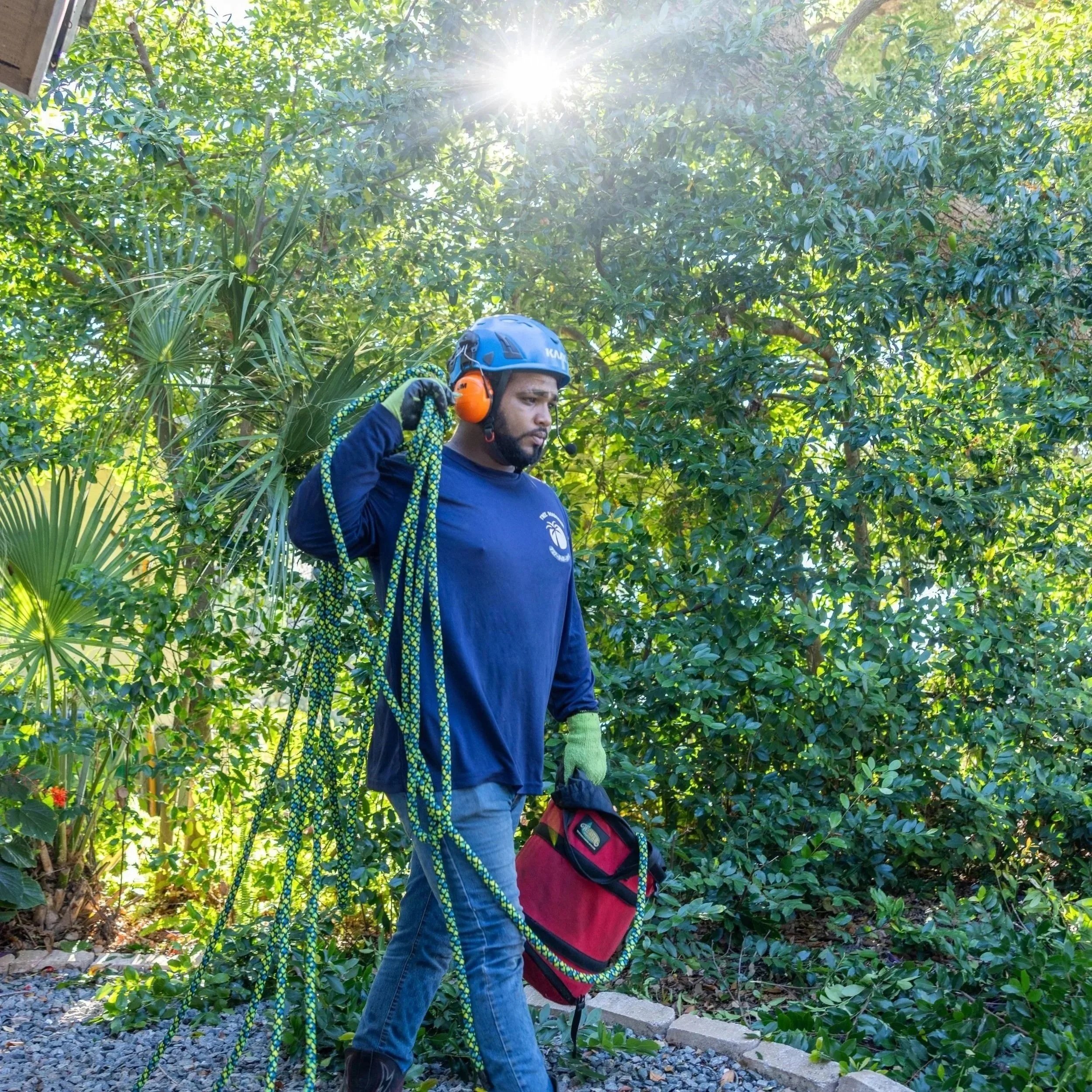
Brace rods strengthen trees internally, preventing splitting and preserving valuable shade trees in storm-prone areas.
Understanding Tree Brace Rods and Why They Matter
Brace rods play a specific and important role in modern tree care, especially when structural weaknesses appear in trees that still hold value and viability. These rigid steel rods are installed directly through or between stems to reinforce weak unions where natural wood strength is no longer sufficient. They are not cosmetic additions or optional upgrades, but corrective tools designed to reduce the likelihood of structural failure. In storm-prone areas like Largo, FL, where saturated soils and strong winds continually stress mature trees, brace rods often allow valuable shade trees to remain standing safely rather than be removed prematurely.
Unlike external supports such as props or guy wires, brace rods work internally by physically tying stems together at the point where splitting forces concentrate. Most systems use galvanized or stainless steel rods that resist corrosion and maintain strength over time. Once installed and properly tensioned, the rod limits separation at the union while still allowing some natural movement. Understanding this internal function helps property owners see brace rods as part of a structural reinforcement strategy rather than as visible external bracing.
How Brace Rods Improve Tree Stability
Brace rods improve stability by counteracting the outward forces that cause stems to separate under load. Trees with codominant stems or existing cracks experience repeated stress from wind and canopy weight, which can worsen separation over time. A brace rod holds those stems together internally, reducing independent movement and distributing load more evenly across the structure. This redistribution lowers stress concentration at weak points and reduces the likelihood of sudden failure during storms.
It is essential to set realistic expectations. Brace rods reduce risk but do not eliminate it or permanently repair damaged wood. They work best alongside selective pruning that reduces canopy weight and, in many cases, tree cabling higher in the crown that manages sway. Trees continue to grow and respond to their environment, so brace rods must be inspected and maintained. Viewing bracing as a risk reduction tool rather than a permanent fix helps guide responsible long-term tree care decisions.
When Brace Rods Are Recommended and When They Are Not
Arborists typically recommend brace rods for trees with codominant stems that show included bark, visible cracking at major unions, or partial separation that still retains structural potential. These conditions often occur in mature shade trees near homes, sidewalks, driveways, or play areas, where failure would have serious consequences. Certain species known for weak unions benefit from early bracing when defects are identified before catastrophic failure occurs.
Brace rods are not suitable for every situation. Trees with extensive internal decay, severe structural compromise, or poor overall health may not respond well to bracing, and installing hardware can delay but not prevent failure. In those cases, removal may be safer and more cost-effective. Installing brace rods without proper assessment can waste resources and even accelerate decline if drilling damages already weakened tissue. Professional evaluation helps ensure that bracing is used only when it provides a meaningful benefit.
Brace Rods Compared to Tree Cabling
Brace rods and tree cabling serve different but complementary purposes. Brace rods provide rigid internal support at weak unions where splitting forces are greatest. Tree cabling uses flexible cables installed higher in the canopy to limit excessive movement and absorb dynamic loads. Rods resist separation directly at the point of weakness, while cables manage motion across the crown.
Many real-world situations require both systems. A cracked union may need internal bracing, while long, heavy limbs above it require cabling to reduce sway. This combined approach addresses both internal stability and canopy dynamics, reflecting a tailored solution rather than a one-size-fits-all treatment.
Safety and Liability Considerations
Improperly installed brace rods can increase risk rather than reduce it. Poor placement, incorrect materials, or inadequate tensioning can damage vascular tissue, introduce decay, or fail under load. This creates a false sense of security that can put people and property at greater risk during severe weather events common in Florida.
Liability also plays a role. If a braced tree fails and causes damage, questions may arise about installation quality and maintenance. Documentation of professional assessment, proper installation, and routine inspections supports safer outcomes and helps protect property owners. Treating brace rod installation as a professional intervention rather than a hardware fix is essential.
Assessing Tree Condition Before Bracing
Before considering brace rods, overall tree health must be evaluated. Healthy trees show full canopies, normal leaf size and color, and steady growth. Warning signs include thinning foliage, dieback, fungal growth, and insect activity. Installing brace rods in a declining tree can add stress without addressing underlying problems.
Structural defects such as codominant stems, cracks, and seams indicate where bracing may help, but the extent of decay matters as much. Brace rods rely on sound wood for anchoring, so advanced decay around the installation area can make bracing ineffective. Arborists may use diagnostic tools to assess internal conditions before recommending support.
Tree species and growth characteristics also influence outcomes. Some species naturally form weak unions, while others maintain a stronger structure. Fast-growing trees may engulf hardware more quickly, requiring closer monitoring, while slower-growing species often hold hardware securely for decades. These factors guide whether bracing represents a practical long-term investment.
Planning Brace Rod Installation
Effective bracing begins with clear objectives. Goals may include stabilizing a cracked union, slowing separation, or reducing risk toward a specific target. Vague expectations, such as making a tree completely safe, lead to poor decisions. Brace rods address specific mechanical weaknesses rather than eliminating all risk.
Proper placement requires understanding load paths. Rods are typically installed just below or through weak unions, aligned perpendicular to the expected line of failure. Sound wood at each installation point is critical. Larger trees or complex defects often require multiple rods to distribute load effectively rather than relying on a single component.
Bracing rarely stands alone. Pruning reduces canopy weight, and cabling controls sway, allowing brace rods to function within a manageable load range. Budgeting should account for installation, follow-up inspections, and potential adjustments as the tree grows and conditions change.
Materials and Hardware Selection
Brace rods are commonly made from galvanized or stainless steel to resist corrosion in humid climates like Largo, FL. Generic hardware is poorly suited for tree support because it rusts quickly and lacks appropriate design features. Fully threaded rods, large washers, and properly sized nuts work together to distribute pressure and hold stems together under load.
Sizing matters. Oversized rods remove unnecessary wood, while undersized rods may fail under stress. Industry standards such as ANSI A300 guide material selection and installation practices, helping balance strength with tree health.
Professional installation requires specialized tools and safety equipment. Drills, long bits, climbing gear, and protective equipment are necessary to perform the work accurately and safely. These requirements highlight why trained arborists best handle brace rod installation.
Installation Process Overview
Installation begins with careful drilling through the targeted union, maintaining precise alignment. Changes in resistance during drilling can reveal decay, prompting reassessment. The threaded rod is then inserted, centered, and fitted with washers and nuts.
Tensioning is done gradually to stabilize the union without crushing tissue. Over-tightening damages bark and cambium, while under-tightening fails to restrict movement. When multiple rods are used, tensioning is coordinated to balance forces. Excess rod length is trimmed, and sharp edges are smoothed for safety.
Combining Brace Rods With Cabling
Cabling often complements bracing by reducing canopy movement and shock loads. Cables are placed higher in the crown to limit sway, protecting the braced union from excessive stress. Proper placement and tensioning ensure that cables and rods work together rather than creating new stress points.
Combined systems require periodic inspection to monitor hardware condition, tree response, and evolving structural needs. Adjustments may be needed as the tree grows or conditions change.
Aftercare and Long-Term Monitoring
Ongoing observation is essential after brace rods are installed. New cracks, loosening hardware, or changes in canopy health signal the need for professional evaluation. Trees naturally grow around hardware, and some embedding is normal, but regular inspections help distinguish normal response from developing problems.
Professional inspections every one to three years, and after major storms, allow arborists to adjust hardware, recommend pruning, or reassess whether bracing remains appropriate. At some point, progressive decay or changing conditions make removal the safer option.
DIY Versus Professional Installation
DIY brace rod installation carries significant safety and technical risks. Working at height with power tools on compromised trees can cause serious injury. Incorrect placement or sizing can weaken the tree rather than stabilize it.
Certified arborists bring expertise in tree biology, structural assessment, and industry standards. They also carry insurance that protects property owners. Professional installation provides safer, more reliable outcomes and clearer guidance about long-term management.
Common Mistakes to Avoid
Relying on hardware instead of pruning, placing rods incorrectly, over-tightening or under-tightening, and neglecting inspections all undermine bracing effectiveness. Ignoring site conditions, root health, and target exposure can also lead to poor decisions. Avoiding these mistakes requires professional assessment and ongoing care.
Environmental and Ethical Considerations
Brace rods help balance tree preservation with safety, allowing mature trees to remain standing while reducing risk. They also support wildlife habitat and urban canopy value. Ethical tree care recognizes limits and acknowledges when preservation no longer aligns with public safety.
Long-term planning pairs selective bracing with proactive planting so future canopy replaces aging trees. Clear communication with stakeholders and documentation of decisions support transparency and responsible management.
Conclusion
Brace rods are specialized tools used to stabilize significant structural weaknesses in trees that remain valuable and viable. When installed thoughtfully and combined with pruning, cabling, and regular inspections, they can extend the safe life of mature trees and reduce failure risk. Success depends on proper assessment, material selection, precise installation, and ongoing care.
In storm-prone areas like Largo, FL, brace rods play an important role in responsible tree management. Working with a qualified arborist helps ensure that decisions reflect professional standards, realistic expectations, and a balanced approach to safety and preservation.
Tree Support & Brace Rod FAQs in Largo, FL
Pruning is often sufficient when excess canopy weight causes stress, but unions remain sound. Brace rods are considered when clear structural defects, such as cracks or codominant stems with included bark, are present, and pruning alone cannot stabilize the tree.
Brace rods can reduce the likelihood of failure in trees with minor to moderate cracks by limiting further separation. They do not restore damaged wood or eliminate all risk, and effectiveness depends on early intervention and overall tree health.
When made from corrosion-resistant materials and installed correctly, brace rods can remain functional for many years. Trees grow around hardware over time, which is normal, but regular inspections are necessary to monitor performance and make adjustments.
Professional installation is strongly recommended. Brace rod installation involves safety risks, permanent drilling, and structural assessment that require training and experience. Certified arborists provide safer installation and long-term guidance for managing supported trees.
