
How to Maintain Your Tree Cabling System in Largo, FL
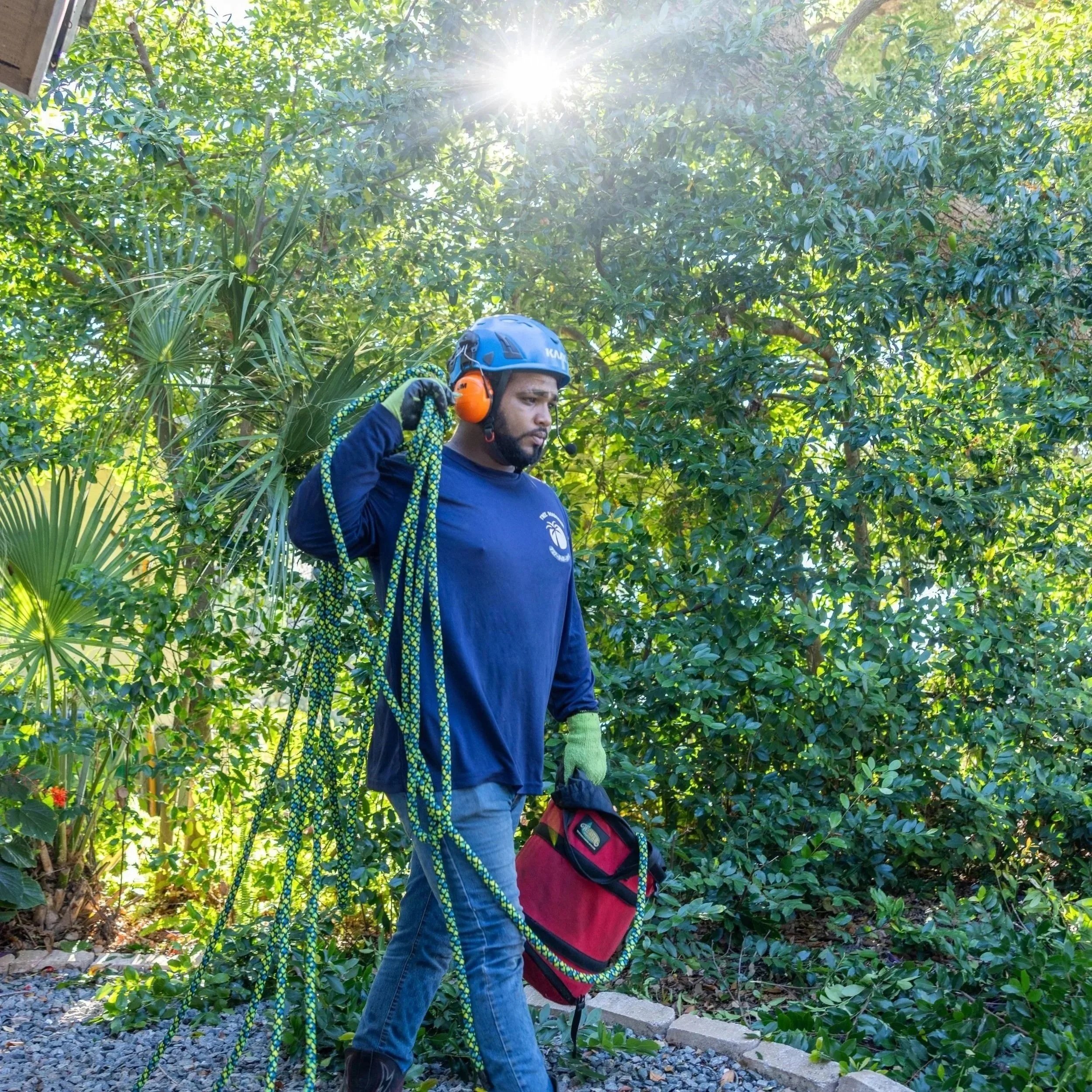
Regular maintenance of tree cabling preserves structural support and reduces hazards for Largo’s mature trees.
Understanding Tree Cabling Systems and Why Maintenance Is Ongoing
Tree cabling systems are designed to support structurally vulnerable trees by redistributing stress and reducing the likelihood of branch or stem failure. Rather than correcting a defect outright, cabling works alongside the tree’s natural movement to limit excessive strain during wind, heavy foliage loads, or storm events. In Largo, FL, where strong seasonal storms and rapid growth cycles are common, cabling is often used to preserve mature trees that would otherwise pose unacceptable risk near homes, driveways, pools, or walkways.
Maintenance is not optional once a tree has been cabled. Even a professionally installed system changes over time as the tree grows, hardware ages, and environmental conditions apply repeated stress. Cables can loosen or tighten unintentionally, metal components may corrode in humid coastal air, and attachment points can become compromised if growth patterns shift. Without regular monitoring and professional oversight, a cabling system can lose effectiveness or create new hazards, which is why long-term maintenance should be viewed as part of the original decision to cable a tree rather than an afterthought.
Why Trees Are Commonly Cabled in Largo Neighborhoods
Trees in Largo are frequently cabled due to structural traits that increase failure risk under wind load. Codominant stems with narrow V-shaped unions, heavy lateral limbs extending over structures, and mature canopies constrained by small residential lots are common triggers for cabling. Local species such as live oaks and laurel oaks are often preserved for shade and character, but may develop weight imbalances that benefit from structural support.
Understanding the original purpose of a cabling system matters when planning maintenance. A tree cabled primarily to reduce risk over a roof may require more frequent inspections than one supported for long-term canopy preservation. Homeowners who can access prior arborist reports or installation notes are better positioned to maintain the system correctly, as those documents clarify which defects were targeted and the expected level of risk reduction.
Types of Cabling Systems and Hardware You May Encounter
Most residential tree cabling systems fall into two broad categories: static steel systems and dynamic synthetic systems. Static systems rely on steel cables and hardware to significantly limit limb movement, while dynamic systems use flexible materials that allow limited motion, helping trees adapt to stress. From the ground, static systems typically appear as metal cables running between branches, whereas dynamic systems may resemble reinforced rope or fabric supports.
Both systems depend on multiple hardware components, including bolts, anchors, thimbles, braces, and connectors. Each part plays a specific role, and failure of any single component can compromise the entire system. In Largo’s humid climate, metal components are especially vulnerable to corrosion, making visual monitoring and professional inspection vital for long-term reliability.
How Largo’s Climate Shapes Cabling Maintenance
Largo’s climate creates a demanding environment for cabled trees. High humidity, frequent rain, intense sun exposure, and the ongoing threat of tropical storms all accelerate hardware wear and increase stress on tree structures. Long growing seasons mean trees add girth and canopy mass quickly, which can unintentionally alter cable tension if adjustments are not made.
These conditions require homeowners to be more proactive than in milder climates. Storm seasons call for pre- and post-event inspections, while warm, wet conditions increase the likelihood of decay around wounds or attachment points. Cabling maintenance in Largo must account for both biological growth and environmental exposure, making regular oversight essential rather than optional.
Safe Homeowner Involvement Versus Professional Responsibility
Homeowners play an important role in observing cabled trees, but there are clear limits to what should be done without professional training. Ground-level visual checks are appropriate and encouraged, but climbing trees, using ladders near cables, or attempting to adjust hardware is dangerous and should never be attempted. Tree cabling systems are safety-critical structures, and improper handling can lead to sudden failure or serious injury.
Appropriate homeowner actions include photographing visible changes, noting storm dates, keeping a simple inspection log, and reporting concerns promptly. Inappropriate actions include drilling into wood, tightening cables, cutting limbs near attachment points, or attempting to remove damaged hardware. Maintenance should be treated with the same caution as electrical or structural systems in a home: awareness is useful, but technical work should be left to qualified professionals.
Establishing a Practical Inspection Schedule
In a coastal Florida setting like Largo, professional inspections every one to two years provide a reasonable baseline for most cabled trees. Large, mature trees or those positioned over high-value targets may require more frequent evaluation. Between professional visits, homeowners can perform brief visual checks several times a year to identify noticeable changes.
Seasonal timing improves inspection effectiveness. Pre-hurricane season checks help identify vulnerabilities before severe weather, while post-storm assessments focus on movement, cracks, or hardware shifts. Cooler months often provide better visibility as growth slows, making them ideal for detailed professional evaluations. Consistency matters more than exact timing, and documented routines help prevent overlooked issues.
Keeping a Simple Inspection and Maintenance Log
A basic inspection log helps track observations and professional recommendations over time. This record can be as simple as a notebook or digital document, but consistency is key. Useful entries include dates, recent weather events, visible changes in cables or tree structure, photographs taken, and notes from arborist visits.
Over time, this documentation reveals trends that are difficult to notice otherwise. Gradual changes in cable tension, limb position, or canopy balance become clearer when compared year to year. Logs also support insurance claims and demonstrate reasonable care if questions about liability arise following storm damage.
Ground-Level Visual Checks Homeowners Can Perform
Homeowners can safely inspect cabling systems by walking around the tree and looking upward from multiple angles. Cables should appear purposeful and properly aligned rather than slack, twisted, or sharply bent. Missing components, sudden sagging, or noticeable shifts after storms warrant professional attention. Binoculars or phone zoom features can help with observation while keeping feet firmly on the ground.
Corrosion is another key indicator to watch for in Largo’s climate. Surface discoloration may be harmless, but deep pitting, flaking metal, or thinning cable strands can indicate loss of structural integrity. Homeowners should never attempt to clean or coat corroded hardware, as this can hide serious damage and delay proper repairs.
Monitoring Tree Structure Around Attachment Points
The wood surrounding cable attachment points deserves close attention. New cracks, splits, bulges, or areas of compressed bark may indicate that stress is concentrating where it should not. Comparing current conditions with older photos helps identify subtle changes that might otherwise be missed.
Cable tension can also be assessed visually. Cables that appear embedded in bark or create deep indentations may be too tight, while cables that hang loosely may no longer provide support. Because proper tension varies by system type, homeowners should focus on changes over time rather than absolute appearance and share those observations with an arborist.
Watching Overall Tree Health and Stability
Cabling is most effective when the tree itself remains biologically healthy. Signs of stress, such as thinning foliage, undersized leaves, deadwood accumulation, or uneven canopy density, may signal declining health that increases failure risk even with support in place. In Largo’s warm climate, healthy trees typically show consistent vigor, making sudden changes easier to spot.
Bark condition near the hardware also provides clues. Normal callus growth around bolts is expected, but soft wood, persistent moisture, fungal growth, or dark oozing areas suggest decay or infection. These issues reduce the tree’s ability to tolerate stress and should prompt professional evaluation rather than reliance on existing support.
The Importance of Roots and Soil Conditions
Structural stability depends as much on roots as on branches. Compacted soil, poor drainage, and construction damage can weaken root systems, increasing the likelihood of whole-tree failure regardless of cabling. In Largo, heavy rainfall can saturate soils, reducing root anchorage during storms.
Simple practices such as maintaining a mulch ring, preventing equipment traffic near the trunk, and monitoring for standing water after storms help support root health. While these steps are not part of cabling itself, they strongly influence how effective a support system can be under stress.
Professional Adjustments, Upgrades, and Integrated Care
As trees grow, professional adjustments are often necessary to keep cabling effective. Arborists may retension cables, reposition attachment points, replace aging hardware, or add supplemental support based on changes in canopy weight and structure. These decisions require careful assessment and should always follow current arboricultural standards.
Older cabling systems may no longer meet modern best practices, particularly if materials or placement methods have evolved. In such cases, upgrading components can improve safety and longevity. Cabling is often combined with bracing and targeted pruning to manage risk holistically, reducing strain while preserving key structural elements.
Storm Preparation and Post-Storm Response
Before storms, homeowners should perform quick visual checks for hanging limbs, extreme cable slack, or branches that have shifted closer to structures. Vehicles and outdoor items should be moved out of potential fall zones when possible. Once a storm begins, there is nothing safe a homeowner can do to influence a cabling system, and personal safety should remain the priority.
After storms, inspections should be conducted cautiously from a distance. Hanging limbs, entangled cables, or contact with power lines present serious hazards and require professional response. Photographing visible damage and documenting conditions supports insurance claims and helps arborists assess urgency.
Legal, Safety, and Liability Considerations
Homeowners may be held responsible if a neglected tree or cabling system fails and causes damage, particularly when warning signs were visible. Maintaining inspection records, professional recommendations, and completed work demonstrates reasonable care and due diligence.
Local ordinances or HOA rules may apply to certain trees or types of work. Reputable tree care professionals are typically familiar with these requirements and can help navigate permitting when needed. Hiring insured, certified arborists protects homeowners from financial exposure and ensures work meets recognized standards.
Recognizing When Removal Becomes the Safer Option
There are situations where continued maintenance no longer meaningfully reduces risk. Severe trunk decay, root failure, repeated limb loss, or a pronounced lean toward high-use areas may leave residual risk unacceptably high even with additional support. In these cases, removal may be the most responsible choice.
While emotional attachment to mature trees is understandable, prioritizing safety is essential. Planning for replacement planting and selecting species better suited to site conditions can help preserve long-term canopy benefits while reducing future risk.
Working With Local Tree Care Professionals in Largo
Finding a qualified arborist involves verifying certification, insurance, experience with cabling systems, and familiarity with local conditions. Homeowners should expect clear explanations, written estimates, and a realistic discussion of limitations and benefits.
Building a long-term relationship with a trusted tree care provider improves continuity of care. Professionals who understand a property’s history can detect subtle changes earlier and provide more accurate guidance over time, particularly for properties with multiple cabled trees.
Cost, Budgeting, and Long-Term Value
Routine inspections and minor adjustments are typically far less expensive than new installations or emergency removals. Budgeting for ongoing maintenance helps spread costs predictably and avoid deferred care that can lead to higher expenses later.
Mature trees add real value through shade, energy savings, and aesthetics. Investing in maintenance often makes financial sense when weighed against replacement costs and potential storm damage. Unrealistically low bids should be approached with caution, as shortcuts in safety-critical work can lead to greater expense and risk over time.
Conclusion
Maintaining a tree cabling system in Largo, FL requires ongoing attention, informed observation, and regular professional involvement. Cabling is not a permanent fix, but when properly monitored and adjusted, it can significantly reduce risk while preserving valuable trees in a storm-prone environment. Homeowners contribute by observing safely, documenting changes, and responding promptly to warning signs, while trained arborists handle inspection, adjustment, and integration with broader tree care.
A thoughtful maintenance approach protects people and property, supports long-term tree health, and maximizes the return on investment in mature landscapes. By aligning cabling care with local climate realities and building a long-term partnership with qualified professionals, property owners can manage risk responsibly while preserving the benefits trees provide.
Tree Cabling FAQs in Largo, FL
Most cabled trees benefit from professional inspections every one to two years, with additional checks after major storms or for large trees over structures.
Trained professionals should always perform tree cabling installation and adjustment. Improper handling can damage the tree and increase failure risk.
Visible changes, such as shifted cables, new cracks, broken hardware, or hanging limbs, indicate the need for a professional inspection to confirm stability.
Significant limb thickening beyond attachment points, new unsupported heavy branches, or increased movement during winds may indicate the need for system upgrades or reassessment.
