
A Guide to the Different Types of Tree Cabling Systems Used in Largo, FL
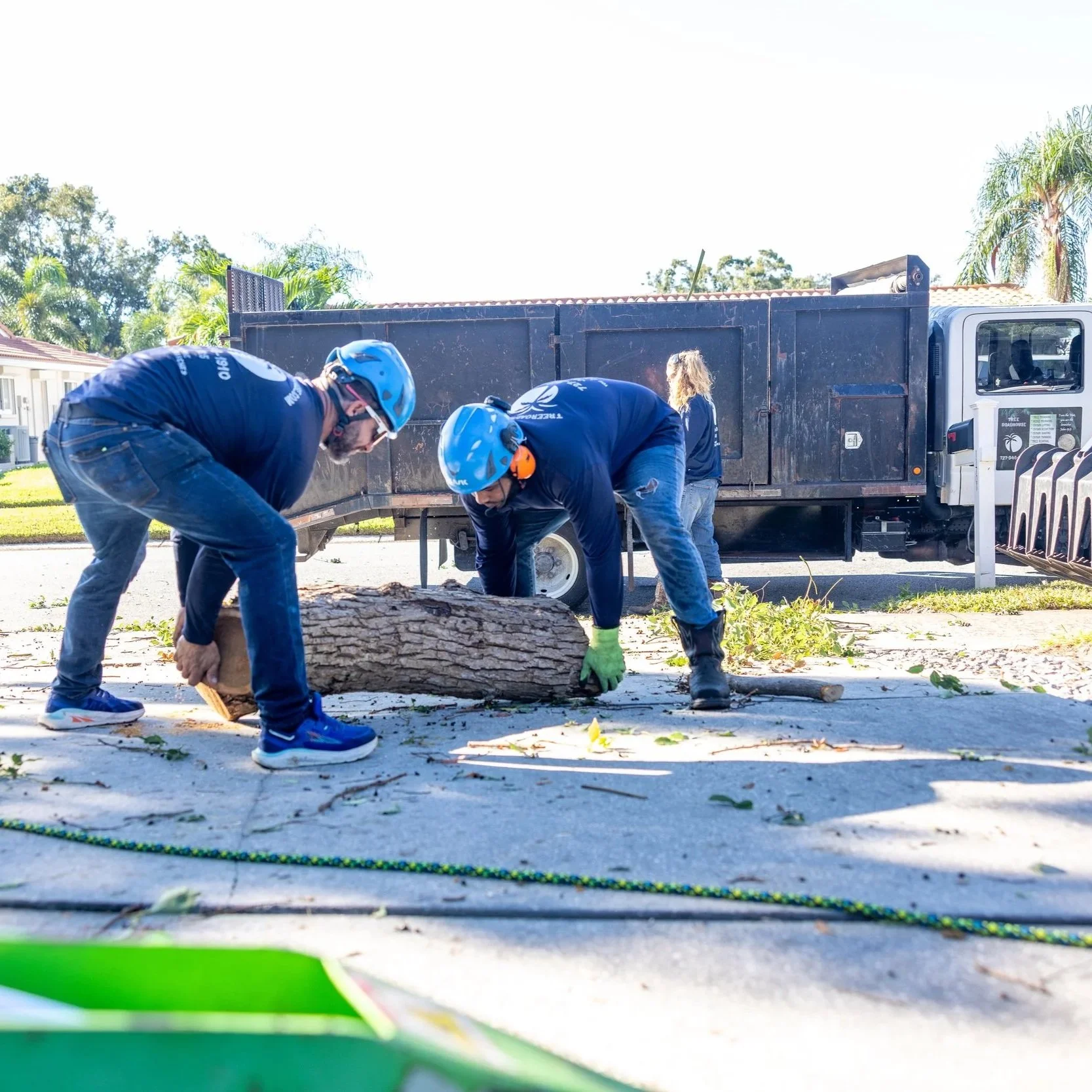
Tree in Largo, FL with professional cabling installed to stabilize large limbs and protect property from storm damage.
Understanding Tree Cabling in Largo, FL
Tree cabling is a structural support method used to stabilize trees with weak or overextended limbs by installing high-strength cables within the canopy. Instead of removing branches or reshaping the tree for appearance, cabling works quietly behind the scenes to manage movement and reduce stress at vulnerable attachment points. The cables are installed high in the canopy where leverage forces are greatest, allowing the tree to move naturally while preventing limbs from separating too far during strong winds. When properly installed, these systems sit well above eye level and visually disappear into the canopy as the tree continues to grow.
In Largo, FL, tree cabling is often a practical necessity rather than a specialty service. Seasonal thunderstorms, tropical systems, and steady coastal winds repeatedly strain mature trees, particularly those growing near homes, pools, driveways, and streets. Large shade trees, such as live oaks, develop broad canopies that catch the wind easily, increasing the likelihood of limb failure during storms. Cabling reduces that risk while allowing homeowners to preserve established trees that provide shade, cooling benefits, and long-term landscape value in a warm coastal environment.
Goals of Tree Cabling Compared to Other Tree Services
The primary purpose of tree cabling is to improve structural stability by redistributing mechanical stress within the canopy. Trees with weak branch unions, co-dominant stems, or heavy lateral limbs are more likely to fail when limbs move independently under load. Cabling limits that independent movement, reducing the chance of cracking or splitting at attachment points during high winds. In many cases, cabling works best alongside selective pruning to manage weight and improve canopy balance.
Tree cabling does not replace every other tree service. Trees with advanced internal decay, severe root damage, or widespread structural compromise may not respond well to added support because the underlying structure cannot safely handle redistributed loads. In those situations, removal may be the safest option. Arborists in Largo evaluate species, age, defect severity, soil conditions, and proximity to targets before recommending cabling. That assessment helps determine whether cabling provides meaningful risk reduction or whether pruning or removal offers a better long-term outcome.
Common Tree Species in Largo That May Need Cabling
Several tree species commonly found in Largo are frequent candidates for cabling due to their natural growth habits. Live oaks develop long, heavy horizontal limbs that provide excellent shade but place increasing strain on branch unions as they age. Laurel oaks grow quickly and often form weaker attachments that fail during storms. Slash pines may develop uneven canopies that lean toward open space or roadways, increasing stress on individual limbs. Some ornamentals, including crape myrtle and jacaranda, can develop brittle unions that split when growth outpaces structural strength.
Site history also plays a major role. Trees that were topped or improperly pruned often develop multiple competing leaders with weak attachments. Limited planting space near buildings or pavement can force uneven growth, increasing leverage on certain limbs. In many Largo neighborhoods, mature trees extend over roofs, pools, and parking areas where limb failure would cause costly damage. Cabling allows those trees to remain part of the landscape while addressing structural weaknesses that worsen if left unsupported.
Key Components of a Tree Cabling System
A tree cabling system includes several components that work together to provide controlled support. The cable itself may be galvanized steel or a high-strength synthetic material, selected based on the tree's condition and environmental exposure. Anchors or attachment loops secure the system to healthy wood, while protective hardware reduces abrasion and allows precise tensioning. Correct tension is critical, since too much restriction or too little support can reduce effectiveness.
Placement high in the canopy matters because it limits excessive limb separation while preserving natural sway. In Largo’s coastal environment, arborists also consider corrosion resistance, UV exposure, and how different species respond to hardware over time. The choice of materials and configuration depends on the tree’s structure, location, and long-term management goals.
How Tree Cabling Works
Tree cabling redistributes mechanical loads that would otherwise concentrate at weak attachment points. Instead of allowing all force to bear on a single union, the system shares that load across multiple limbs or stems. The goal is not to immobilize the tree, but to limit excessive movement that can lead to cracking or tearing during storms. Arborists study how forces move through the canopy before determining cable height and placement, often pairing cabling with selective pruning to reduce excess weight.
Tree biology also plays a role. Trees compartmentalize damage rather than healing in the traditional sense, so arborists choose attachment points that minimize long-term disruption. Systems must allow room for growth, especially in Florida’s fast-growing conditions. Ongoing inspections are essential because trees change over time, and cabling is not a set-and-forget solution.
Static Steel Tree Cabling Systems
Static steel cabling uses high-strength steel cables and permanent hardware to maintain a fixed relationship between major limbs or stems. These systems significantly restrict movement and are best suited for trees with serious structural defects where failure would have severe consequences. Installation involves securing hardware into sound wood and connecting those points with a steel cable designed to resist high loads.
In Largo, static systems are commonly used on large live oaks or laurel oaks growing near homes, streets, or high-traffic areas. Coastal conditions influence material selection, with corrosion resistance playing an important role in areas subject to saltwater exposure. While static systems provide strong support, they require careful planning to avoid transferring stress elsewhere in the tree.
Dynamic Tree Cabling Systems
Dynamic cabling systems use flexible, non-metallic materials that allow controlled movement while limiting extreme sway. Instead of drilling into the wood, these systems often wrap around branches with protective sleeves, making them less invasive. The controlled movement encourages adaptive growth, helping trees strengthen naturally over time while still reducing failure risk.
Dynamic systems work well for younger or mid-aged trees with developing structural issues, especially in Largo’s windy environment. They allow trees to acclimate to wind exposure rather than resisting it entirely. These systems require periodic inspection because synthetic materials degrade under UV exposure and heat, but they offer a balance between support and biological compatibility.
Bracing Rods and Combined Support Systems
Bracing involves installing threaded rods through cracked or splitting unions to reinforce them internally. While cabling manages movement above the defect, bracing stabilizes the defect itself. Arborists often combine bracing with cabling when a tree has visible cracks or included bark that could worsen under load.
This combined approach is common in Largo, where large trees grow close to structures. Proper placement and sizing are critical, and bracing hardware is more visible than cabling. Homeowners often weigh aesthetic considerations against safety and the value of preserving mature trees.
Guying and Propping Systems
Guying anchors a tree to the ground using cables or straps attached to stakes or anchors. It is often used temporarily to support leaning or recently transplanted trees while roots establish or recover. Propping supports heavy limbs from below using posts or crutches, reducing stress at weak attachment points.
In storm-prone areas like Largo, guying may also be used after severe weather to stabilize partially uprooted trees during recovery. These systems require careful design and monitoring, since improper installation can introduce new risks.
Choosing the Right Cabling System for Your Property
Selecting the right system begins with assessing risk and identifying targets such as homes, vehicles, and walkways. Tree age, species, defect severity, and site conditions all influence system choice. Younger trees often respond well to dynamic systems, while older trees with advanced defects may require static cabling or combined support.
Budget and maintenance expectations matter as well. Static systems may last longer but cost more upfront, while dynamic systems involve planned replacement. Working with an ISA-certified arborist familiar with Largo conditions helps match the right solution to each tree and property.
Inspection, Maintenance, and Long-Term Care
Most cabled trees in Largo benefit from annual inspections and additional evaluations after major storms. Arborists check hardware, attachment points, and canopy structure for changes that affect performance. Signs such as sagging cables, fraying materials, or new cracks warrant prompt attention.
Selective pruning often complements cabling by reducing canopy weight and improving wind flow. Over time, systems may need adjustment or upgrading as trees grow and conditions change. Eventually, some trees outgrow the benefits of cabling, and removal becomes the safest option when structural decline advances too far.
Costs and Practical Considerations
Tree cabling costs in Largo vary based on tree size, system type, access, and additional services such as pruning or lightning protection. Dynamic systems for smaller trees generally cost less than static steel systems for large, mature trees. Proactive cabling often costs less than emergency work after storms.
Hiring insured professionals provides protection and documentation that can support insurance claims if damage occurs. Planning cabling work before hurricane season improves availability and outcomes, reducing rushed decisions when storms approach.
Environmental and Ethical Considerations
Tree cabling supports canopy preservation, wildlife habitat, and long-term urban forest health. Mature trees reduce heat, improve air quality, and enhance property value. Structural support allows many trees to remain standing safely rather than being removed prematurely.
Ethical tree care balances preservation with safety. When removal becomes necessary, replanting with wind-resilient species suited to Largo’s conditions helps build a stronger landscape for the future.
Tree Cabling FAQs in Largo, FL
Cabling becomes appropriate when structural weakness, not just excess weight, increases failure risk. Trees with co-dominant stems, cracks, or heavy limbs over structures often need support beyond pruning.
When properly designed and installed, cabling works with tree biology and allows continued growth. Regular inspections are essential in Florida’s fast-growing conditions.
Steel systems can last many years with maintenance, while dynamic systems have defined service lives and require periodic replacement. Annual inspections guide timing.
Tree cabling involves specialized knowledge, equipment, and risk assessment. Professional installation by a qualified arborist is strongly recommended for safety and effectiveness.
