
Why Tree Cabling and Bracing Matter for Storm-Prone Areas Like Largo, FL
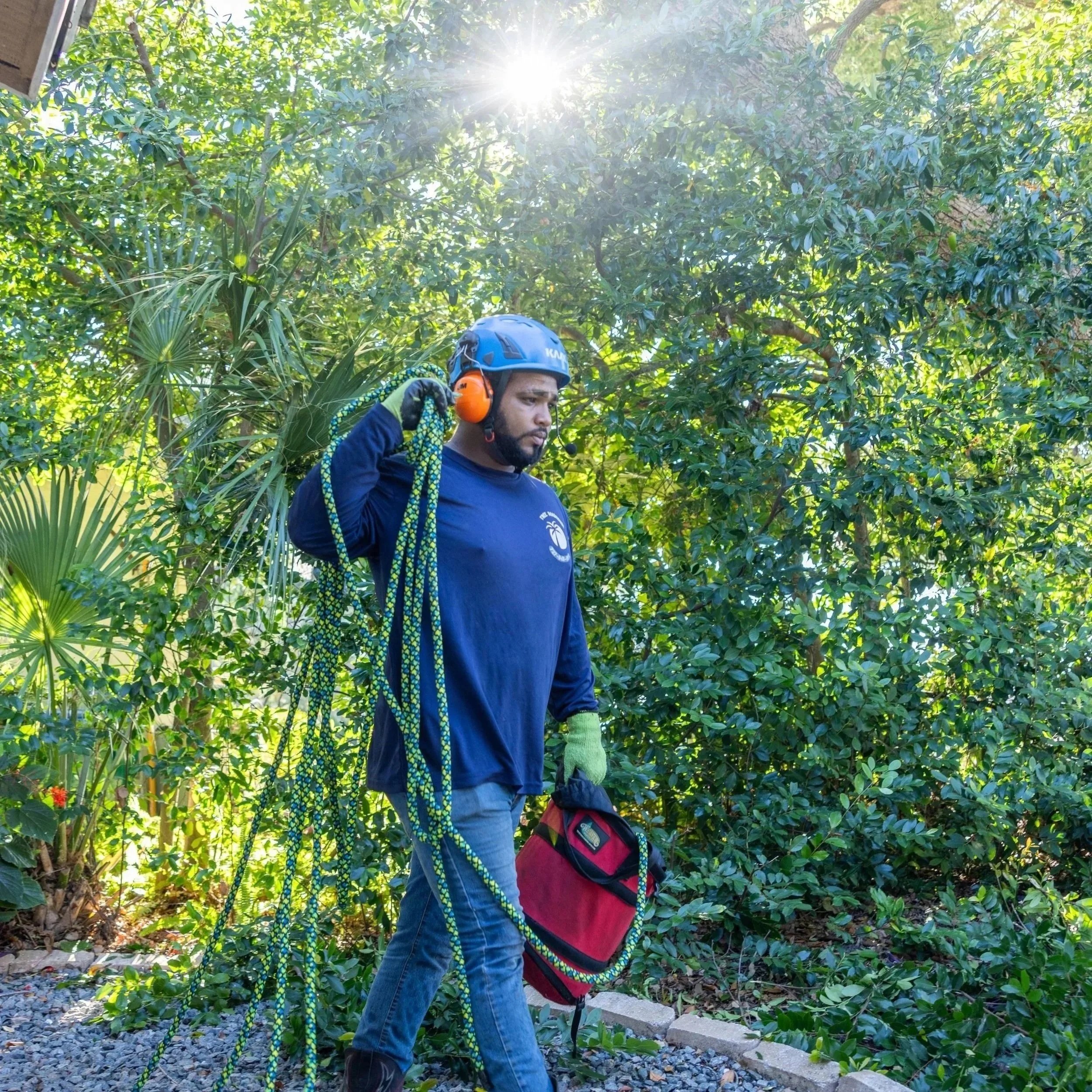
Cabling and bracing help Largo trees resist storm damage by reinforcing weak limbs and trunk structures.
Storms are a fact of life in Largo, FL. Tropical systems, hurricanes, intense summer thunderstorms, and saturated soils all repeatedly stress trees growing near homes, roads, and public spaces. While healthy trees are naturally flexible, many develop structural weaknesses over time, making them vulnerable when high winds arrive. Tree cabling and bracing plays a critical role in managing those risks, especially in coastal and storm-exposed communities where tree failure can cause serious property damage or personal injury.
Understanding how and when these systems are used helps property owners make informed decisions about preserving mature trees while protecting people and structures. Cabling and bracing are not emergency fixes or cosmetic upgrades. They are engineered support systems designed to reduce the likelihood of failure in trees that still have value and structural potential but show identifiable weaknesses.
Understanding Tree Cabling and Bracing in Storm-Prone Areas
Tree cabling and bracing are structural support techniques used in professional arboriculture to stabilize trees with known defects or imbalances. Cabling involves installing high-strength steel or synthetic cables between major limbs or between a limb and the trunk to limit excessive movement during wind events. Bracing involves placing threaded steel rods through weak or cracked trunk or limb unions to reinforce those areas internally. Together, these systems work to redistribute mechanical stress throughout the tree rather than allowing it to concentrate at a single weak point.
These methods do not repair decay, heal cracks, or reverse structural flaws. Their purpose is risk reduction. By limiting how far limbs can move and reinforcing compromised unions, cabling and bracing can slow the progression of damage and reduce sudden breakage when wind loads increase. Hardware selection and placement depend on the tree’s species, size, growth pattern, and defect severity. Improper design or installation can increase risk, which is why these systems require professional judgment and experience.
Why Storm-Prone Areas Like Largo Need Extra Tree Support
Largo’s location along Florida’s Gulf Coast exposes trees to repeated wind stress from tropical storms and hurricanes, along with frequent summer thunderstorms that bring sudden gusts and heavy rain. These conditions test the tree structure year after year. Even minor defects can worsen over time as the same unions flex repeatedly under load. When soils become saturated, root anchorage weakens, allowing more movement above ground and increasing the chance of failure.
Local environmental factors compound these risks. Sandy soils offer less resistance than heavier soils, and a high water table limits deep root development. Salt exposure from coastal air and storm surge can weaken tree health, making structural defects more consequential. In residential neighborhoods, large limbs overhanging roofs, vehicles, sidewalks, and streets represent high-impact hazards. Proactive cabling and bracing help address known weaknesses before severe weather arrives, often costing far less than emergency removal or repairs after a storm.
How Cabling and Bracing Fit Into Tree Risk Management
Tree cabling and bracing should never be viewed as a standalone solution. It is one tool within a broader tree risk management strategy that also includes routine inspections, structural pruning, soil and root care, and removal when risk outweighs benefit. Support systems extend the usable life of trees that might otherwise pose unacceptable hazards, but they require ongoing monitoring as trees grow and conditions change.
In storm-prone areas like Largo, arborists focus on high-target zones such as homes, driveways, sidewalks, playgrounds, and parking areas. Trees near these targets deserve closer evaluation because the consequences of failure are greater. Cabling and bracing often allow valuable shade trees to remain in place while reducing risk to an acceptable level, preserving both safety and neighborhood character.
Common Misconceptions About Cabling and Bracing
A common misconception is that cabling makes a tree hurricane-proof. No support system can eliminate risk during extreme weather. Cabling and bracing reduce the likelihood of failure under many conditions, but they work within the limits of the tree’s biology and the severity of the storm. Another misconception is that any contractor can install these systems. Incorrect placement, poor hardware choice, or over-tightening can increase stress and make a tree more dangerous.
It is also often assumed that older trees cannot benefit from structural support. In reality, many mature trees respond well to properly designed systems when paired with pruning and ongoing care. Each tree must be evaluated individually, especially in storm-heavy regions where experience with local species and conditions matters.
Assessing Tree Risk in Largo Before Storm Season
Homeowners can often spot early warning signs of structural weakness from the ground. V-shaped branch unions with included bark, visible cracks or splits, heavy limbs extending outward with little interior support, and branches dropping during mild weather all indicate increased risk. Changes over time also matter. A growing lean, expanding cavities, increasing deadwood, or new cracks often signal progressive structural decline.
Certain species common in Largo frequently benefit from cabling and bracing. Live oaks, laurel oaks, and water oaks develop large, spreading canopies that catch the wind. Some ornamental and fruit trees form brittle wood or imbalanced growth patterns. Large, mature specimens of these species often represent high-value candidates for support rather than removal, particularly when they provide shade over homes or paved areas.
Environmental and site factors strongly influence stability. Sandy soils, frequent saturation, past root damage from construction, wind funneling between buildings, and coastal salt exposure all increase the failure risk. Arborists evaluate both the tree and its surroundings, including target exposure and traffic patterns, when making recommendations.
Professional Tree Risk Assessments and Timing
During a professional risk assessment, a certified arborist inspects the entire tree structure, often using binoculars or climbing equipment to examine upper canopy unions. They look for defects, decay, root issues, and canopy imbalance, sometimes using tools to detect internal decay. Findings are then translated into management recommendations that may include pruning, cabling, bracing, or removal.
Timing matters. Scheduling evaluations and support work well before hurricane season allows for safer installation and gives trees time to adjust before storms arrive. In Largo, late winter through spring is often ideal. Post-storm inspections remain essential, as high winds can subtly change load distribution or reveal new defects.
How Tree Cabling Reduces Storm Damage
Cabling works by redistributing wind forces across the canopy so no single limb absorbs the full impact. When weaker or heavily weighted limbs are connected to stronger ones, they move together rather than independently, reducing stress at vulnerable joints. Properly installed cabling allows natural movement while limiting excessive sway that leads to breakage.
Static cabling systems use steel cable to restrict movement more firmly and are typically used when defects are severe. Dynamic systems allow controlled movement and absorb shock, making them suitable for trees that still have good overall structure. Arborists select systems based on defect severity, species response, and storm exposure. Placement, height, and configuration vary by tree, with no two layouts exactly alike.
How Tree Bracing Reinforces Weak Trunks and Limbs
Bracing involves installing threaded steel rods through cracked or split unions to hold them together under load. A brace acts as an internal reinforcement, preventing further separation during high winds. Bracing does not repair cracks or reverse decay, but it stabilizes compromised connections so the tree can continue functioning.
Bracing is often combined with cabling. The brace stabilizes the weak union internally, while cables higher in the canopy reduce movement that would otherwise stress that area. Over time, trees grow around bracing hardware, making periodic inspection essential to confirm continued effectiveness and safety.
Choosing Which Trees to Support
Not every tree is a good candidate for cabling or bracing. Arborists distinguish between overall health and isolated defects. A tree with one weak limb but strong vigor and roots may benefit greatly from support. Trees with widespread decay, severe root damage, hollow trunks, or repeated major failures often do not.
High-value, high-target trees receive priority. Mature shade trees near homes or driveways in Largo often justify investment in support when they remain healthy. In contrast, removal may be safer when structural integrity is too compromised to be managed reliably, especially given the intensity of local storms.
Maintenance, Costs, and Liability Considerations
Cabling and bracing systems require regular inspection, typically annually and after major storms. Arborists check hardware condition, tension, anchor points, and surrounding wood. Trees grow, and loads change, so systems may need adjustment or eventual replacement.
Costs vary based on tree size, access, number of supports, and whether pruning is included. Preventive support often costs far less than emergency removal or repairs after storm damage. From an insurance and liability standpoint, documented professional care demonstrates responsible risk management, which can matter when claims or disputes arise.
DIY cabling is risky and often ineffective. Without proper training, homeowners may place hardware incorrectly, choose inadequate materials, or expose themselves to serious safety hazards. Certified arborists bring technical knowledge, insurance coverage, and experience with Largo’s storm conditions that directly affect outcomes.
Environmental and Community Benefits of Preservation
Preserving mature trees through structural support provides environmental benefits that removal cannot replace. Large trees cool neighborhoods, reduce energy demand, improve air quality, and support wildlife. Cabling and bracing enable these benefits to continue while responsibly managing risk.
From a community perspective, fewer storm-related failures mean safer streets, quicker recovery after storms, and a more stable neighborhood canopies. Supporting trees rather than removing them aligns with broader goals of urban canopy preservation and storm resilience in coastal Florida communities.
Conclusion
In a storm-prone area like Largo, FL, tree cabling and bracing play an important role in balancing safety with preservation. These systems stabilize known weak points, reduce the likelihood of storm-related failures, and extend the safe lifespan of valuable trees when properly designed and maintained. When integrated with professional risk assessments, preventive pruning, and ongoing care, cabling and bracing support both public safety and long-term tree health. Proactive planning, realistic expectations, and qualified professional involvement allow property owners to manage tree risk before storms turn weaknesses into costly emergencies.
Tree Cabling & Bracing FAQs in Largo, FL
Warning signs include visible cracks, V-shaped branch unions with included bark, heavy limbs over structures, increased leaning, or branches dropping during mild weather. A certified arborist can determine whether support is appropriate based on structure, species, and target exposure.
It is a long-term solution but not permanent. Trees grow and hardware ages, so regular inspections and occasional adjustments or replacements are needed, especially in storm-prone areas like Largo.
No. Cabling reduces risk but cannot eliminate it. Extreme winds, saturated soils, or root failure can still cause damage. These systems manage risk rather than guarantee protection.
Costs depend on tree size, number of supports, access difficulty, and whether pruning is included. Comparing quotes should focus on the scope of work, hardware quality, and arborist credentials rather than price alone.
