
The Return on Investment of Tree Cabling for Largo, FL, Homeowners
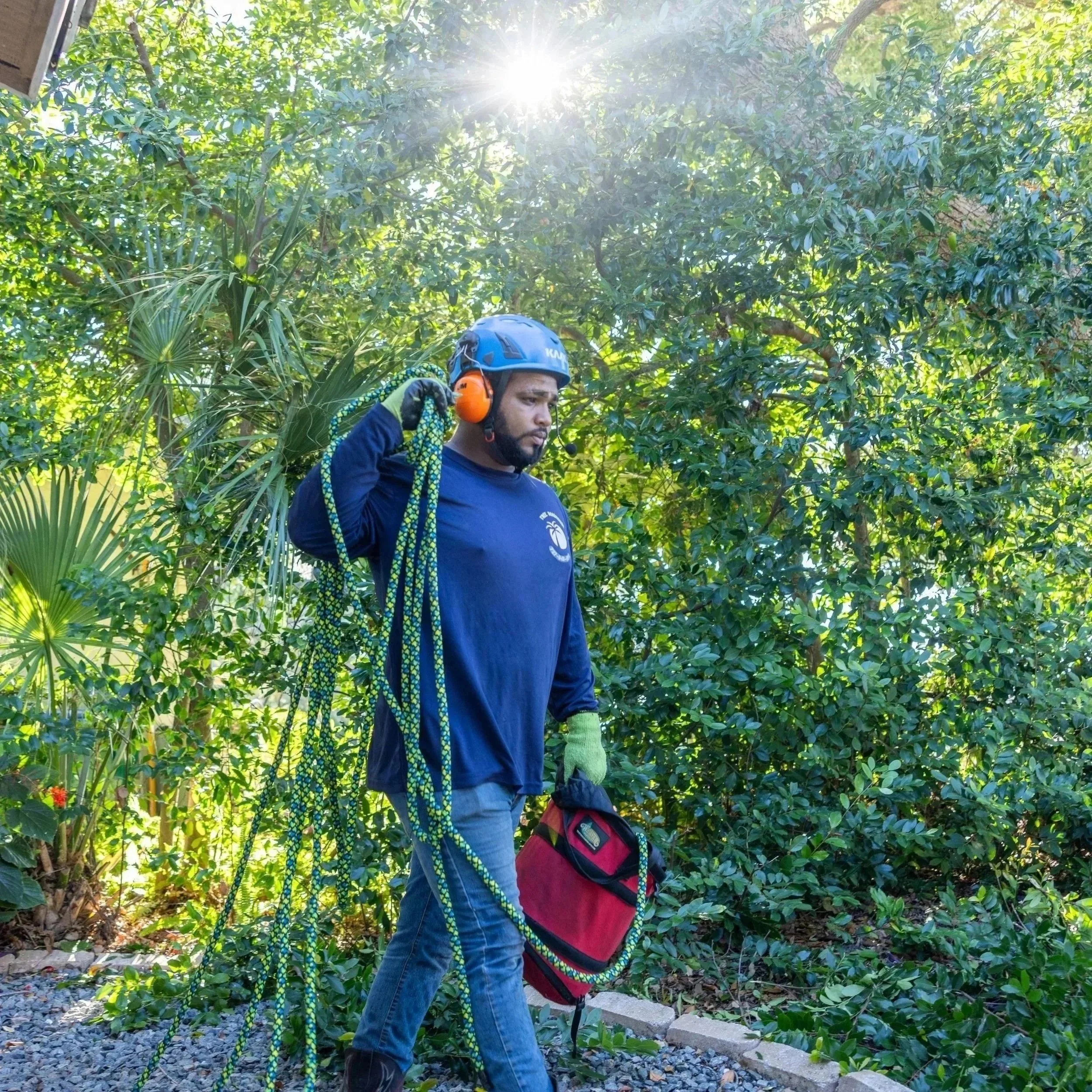
Tree cabling protects vulnerable branches, reducing property damage risk while preserving valuable or historic trees in Largo homes.
Defining Tree Cabling and Its Purpose
Tree cabling is a structural support method that uses high-strength cables and specialized hardware to reinforce weak or vulnerable branches and trunks. These systems are installed high in the canopy to limit excessive movement, reduce mechanical stress at weak branch unions, and help trees withstand the wind forces that commonly cause limb or trunk failure. Cabling does not repair decay or reverse structural defects, but it slows their progression and reduces the likelihood of sudden breakage that can damage property or injure people below.
In residential settings, cabling is typically used on large trees with split trunks, co-dominant stems, included bark, or heavy limbs extending over roofs, driveways, pool enclosures, and living areas. It is also used to preserve historic or high-value trees that homeowners want to keep despite known weaknesses. Without intervention, these defects almost always worsen as trees grow heavier and are repeatedly stressed by storms. Cabling interrupts that long-term failure pattern, preserving trees that might otherwise require removal and reducing the escalating costs associated with unmanaged risk.
Understanding ROI in the Context of Tree Care
Return on investment in tree care is not measured the same way as ROI for renovations or appliances. Trees do not generate income, but they can generate high costs when they fail. ROI in this context reflects avoided expenses, stabilized ownership costs, and preservation of property value over time. For Largo homeowners, this includes preventing storm damage, reducing emergency service calls, avoiding insurance disputes, and preserving the value added by mature trees.
ROI should be evaluated across multiple timelines. In the short term, cabling can prevent immediate hazards and reduce the chance of catastrophic limb failure. Over the medium term, it lowers the likelihood of recurring repair costs to roofs, fences, vehicles, and pool structures. Over the long term, it helps homeowners avoid the high costs of removal, stump grinding, and replanting while preserving shade, energy efficiency, and curb appeal. When viewed this way, cabling often smooths out what would otherwise be sharp spikes in ownership expenses.
Largo, FL Climate and Tree Risk Overview
Largo’s subtropical climate creates persistent stress on mature trees. Frequent thunderstorms, intense summer rain, tropical systems, and occasional hurricanes, combined with high humidity and saturated soils, increase the likelihood of failure. Wind loads increase when soil cohesion decreases, allowing greater canopy movement and placing additional stress on weak branch unions that may already be compromised by age or species characteristics.
Many Largo neighborhoods contain trees planted decades ago, before modern homes, garages, and screened pool enclosures were built beneath them. As these trees mature, their structural weaknesses increase, while the cost of failure rises due to nearby targets. Over years of ownership, unmanaged defects often progress quietly until a major storm reveals them abruptly and expensively. In this environment, proactive tree management is not cosmetic maintenance; it is a form of long-term property protection and cost control.
Who This Guide Is For
This guide is intended for Largo and Pinellas County homeowners who manage properties with mature trees near homes, driveways, walkways, or property lines. It is particularly relevant for those preparing for storm season, responding to concerns from insurance carriers or neighbors, or managing older landscapes where trees were planted long before the current structures were built.
It is also designed for homeowners weighing preservation versus removal and trying to understand long-term financial implications rather than just upfront pricing. The goal is to clarify when cabling makes sense, how it affects ownership costs over time, and how to approach the decision with realistic expectations. This information does not replace an on-site professional assessment, but it provides a framework for informed decision-making.
How Tree Cabling Works: The Basics Homeowners Should Know
Types of Tree Cabling Systems
Residential tree cabling systems generally fall into two categories: static steel systems and dynamic synthetic systems. Static systems use steel cables and hardware to limit movement at specific weak points, making them suitable for trees with pronounced structural defects or high-risk targets below. Dynamic systems allow limited movement, which can encourage gradual strengthening while still preventing excessive separation during high winds.
Additional techniques, such as bracing rods, may be used to reinforce split trunks or weak unions internally. Guying systems may anchor young or recently transplanted trees. The selection of a system depends on the species, defect type, canopy structure, and wind exposure. Homeowners are not expected to choose the system themselves, but understanding the differences helps frame discussions about longevity, maintenance, and long-term costs.
Installation Process Step by Step
Cabling begins with a professional inspection and risk assessment. The arborist evaluates tree health, structural defects, root stability, and nearby targets to determine whether cabling will meaningfully reduce risk. If appropriate, crews access the canopy using climbing systems or aerial lifts, drill precise holes, install hardware, and tension cables according to industry standards.
Proper installation is critical. Incorrect placement or tensioning can accelerate damage or create a false sense of security. When installed correctly, cabling redistributes mechanical forces gradually, slowing defect progression and reducing the likelihood of sudden failure. From an ROI perspective, quality installation minimizes future corrective work, reduces emergency interventions, and protects the initial investment.
Lifespan and Maintenance of Cabling Systems
In Florida’s climate, well-installed cabling systems often last ten years or more, but trees are living structures that continue to grow and change. As limbs gain weight and leverage shifts, cables may require adjustment or replacement. Hardware may also experience wear from humidity, salt air, and repeated movement.
Annual inspections and post-storm evaluations are essential. These inspections are relatively modest in cost compared to installation and play a major role in extending system lifespan. Neglected systems tend to fail prematurely, turning what could have been a long-term solution into a sudden expense. Regular maintenance is one of the strongest predictors of positive return on investment.
When Cabling Is (and Isn’t) the Right Solution
Cabling offers the best value when used preventively on trees with good overall health but identifiable structural weaknesses. Early intervention slows deterioration and keeps ownership costs predictable over time. Trees with manageable defects often respond well, providing years of additional service and value.
Cabling is not appropriate for trees with extensive decay, unstable root systems, or severe lean. In these cases, residual risk remains high even after installation, and costs tend to escalate as defects progress. Ethical arborists recognize when cabling would only delay inevitable removal and advise homeowners accordingly.
Common Largo, FL Tree Species and Structural Issues
Live Oaks and Heavy Canopies
Live oaks develop broad canopies with long lateral limbs that frequently extend over roofs, driveways, and pool enclosures. While the wood is strong, internal defects and accumulated weight increase failure risk over time. Repeated storm loading accelerates crack development at weak unions.
Cabling redistributes stress along these limbs, reducing sudden breakage and helping preserve the shade and property value these trees provide. When installed early, cabling often prevents the escalating cycle of pruning, repair, and emergency response that drives long-term costs upward.
Laurel Oaks and Age-Related Weakness
Laurel oaks grow quickly and are common in older neighborhoods. As they age, internal decay becomes more likely, even when external growth appears healthy. Over time, these hidden defects increase failure risk and complicate ownership decisions.
Cabling can extend the usable lifespan of mid-age laurel oaks, allowing homeowners to plan for eventual replacement rather than facing sudden loss. However, severely decayed specimens often yield poor ROI from cabling, making professional assessment essential.
Pines, Storms, and Top-Heavy Crowns
Pines often develop top-heavy crowns that catch the wind. While cabling may stabilize specific leaders, root instability or severe lean often limits effectiveness. Understanding these limitations helps homeowners avoid investing in solutions that provide minimal long-term benefit.
Palms and Other Ornamental Trees
Palms rarely require cabling, but large multi-stemmed ornamentals sometimes do. In high-end landscapes, cabling protects investments in mature trees that define outdoor living spaces and waterfront views.
How Local Soil and Wind Conditions Affect Structural Risk
Largo’s sandy soils drain quickly but lose cohesion when saturated. During prolonged rain, root plates can shift subtly, increasing canopy movement and compounding stress at weak unions. Over years, this accelerates crack formation and internal separation.
Cabling mitigates above-ground movement but relies on stable roots to be effective. Trees with compromised root systems often escalate in cost regardless of canopy support, underscoring the importance of holistic assessment when evaluating ROI.
Cost Breakdown: What Largo Homeowners Can Expect to Pay
Cabling costs vary based on tree size, canopy complexity, number of cables, access conditions, and whether pruning or bracing is required. Large oaks with multiple defects require more labor, equipment, and materials.
While upfront costs can feel significant, they are often far lower than cumulative repair expenses or emergency removals. Early intervention typically costs less than delayed action, where defects worsen and options narrow.
Measuring the Financial ROI of Tree Cabling
Preventing property damage is often the most tangible return. A single limb failure can simultaneously damage roofs, windows, pool cages, and vehicles. Repair costs frequently exceed the price of cabling, especially when water intrusion or mold remediation follows.
Cabling also reduces emergency service calls, which command premium pricing. Preserving shade trees maintains energy efficiency and property appeal, contributing to long-term value. When these factors are combined, cabling often delivers a favorable ROI even without assigning a dollar value to peace of mind.
Non-Financial Benefits That Support Overall Value
Beyond dollars, cabling supports safety, reduces storm anxiety, preserves environmental benefits, and maintains neighborhood character. These factors influence homeowner satisfaction and long-term property enjoyment, reinforcing overall value.
When Tree Cabling Offers the Best ROI
The strongest ROI occurs when structurally vulnerable trees are valuable and positioned near high-value targets. Early cabling prevents disproportionate damage costs and stabilizes long-term ownership expenses.
When Cabling May Not Be Worth the Investment
Trees with advanced decay, failing roots, or limited remaining lifespan often produce poor ROI. In these cases, removal and replacement provide safer, more predictable outcomes.
Insurance, Liability, and Risk Management Considerations
Documented professional care demonstrates due diligence and supports insurance claims. Ignoring known hazards increases liability exposure, particularly near property lines or public spaces.
Choosing the Right Tree Cabling Professional in Largo, FL
ISA Certified arborists bring both biological and structural expertise to cabling decisions. Detailed proposals, proof of insurance, and clear maintenance plans protect ROI and reduce future disputes.
Maintaining and Monitoring Your Cabled Trees
Routine homeowner observation combined with annual professional inspections keeps systems effective. Neglect shortens lifespan and increases long-term costs.
Conclusion: Making a Smart, Informed Decision About Tree Cabling ROI
In Largo’s demanding climate, tree cabling delivers meaningful return when applied to the right trees at the right time. It stabilizes ownership costs, protects property, preserves landscape value, and supports long-term safety. While not every tree is a candidate, strategic cabling guided by qualified arborists allows homeowners to manage risk responsibly and avoid costly surprises.
FAQs About the Return on Investment of Tree Cabling for Largo, FL Homeowners
Tree cabling strengthens weak branch unions and helps limit failure during high winds. While it cannot eliminate all risk, it significantly reduces the chance of structural breakage at known weak points.
Yes. For large, healthy trees located near homes or structures, cabling is often far more cost-effective than full removal and the associated cleanup and replacement costs.
Most modern cabling systems last ten years or longer with periodic inspection. Annual check-ups ensure proper tension and catch any changes in the tree's structure.
Insurance typically does not cover the cost of installing cabling, but proper documentation can support claims, reduce liability, and demonstrate proactive maintenance.
